

That tight, swollen feeling after a meal (or seemingly out of nowhere) is one of the most common complaints women bring to their doctors. The good news? You don't need a cleanse or a restrictive diet to find relief. Most bloating responds well to small, practical changes you can start today.
This guide walks through what's actually happening in your gut when you bloat, the fastest natural strategies for relief, and the longer-term habits that keep puffiness from coming back.
Why Bloating Happens in the First Place
Bloating is usually a sign of trapped gas, fluid retention, or slowed digestion — not extra fat. It can be triggered by what you ate, how fast you ate it, stress, hormones, or an imbalance in your gut bacteria.
According to the Mayo Clinic, common causes include swallowing air, eating gas-producing foods, constipation, and digestive conditions like irritable bowel syndrome (Mayo Clinic). For many women, bloating also tracks closely with the menstrual cycle, thanks to shifting estrogen and progesterone levels affecting water retention and gut motility.
"Bloating is rarely about a single cause — it's usually the overlap of diet, gut bacteria, hormones, and stress happening at once." — Mayo Clinic, Symptoms Guide
Understanding the root cause matters, but when you need relief now, there are proven strategies that work within hours, not weeks.
The Fastest Natural Ways to Debloat Today
Move Your Body
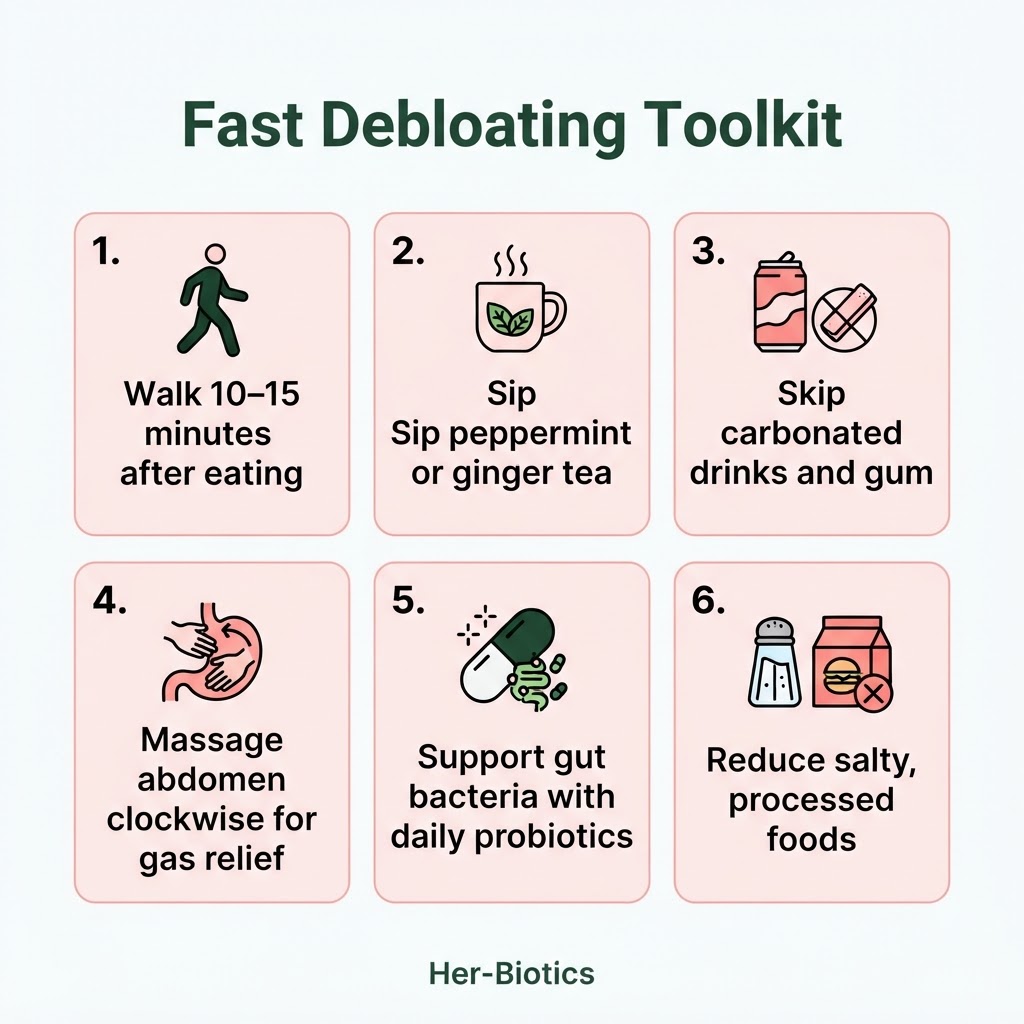
A short walk is one of the simplest ways to get trapped gas moving. Gentle movement stimulates the muscles of your digestive tract, helping gas and stool move along faster.
- Aim for a 10–15 minute walk after meals
- Try gentle yoga poses like child's pose or a seated twist
- Avoid lying down flat right after eating
Sip Warm Water or Herbal Tea
Warm liquids can relax the digestive tract and encourage movement. Peppermint tea in particular has been studied for its antispasmodic effects on gut muscles, which may ease cramping and gas.
Ginger and fennel teas are also popular traditional remedies that many women find soothing.
Loosen Up and Breathe
Tight waistbands can worsen the physical discomfort of bloating. Switching to looser clothing and practicing a few minutes of deep belly breathing can reduce the sensation of pressure.
Try a Gentle Abdominal Massage
Massaging your abdomen in a clockwise motion — following the direction of your colon — may help move gas and ease discomfort. This is a technique often recommended by physiotherapists for constipation-related bloating.
Cut Back on Carbonated Drinks and Gum
Carbonated beverages introduce extra gas directly into your digestive system. Chewing gum and drinking through straws can also cause you to swallow excess air, called aerophagia.
What to Eat (and Avoid) When You're Bloated
Food choices make an enormous difference, both in the moment and over time.
Foods that may help reduce bloating fast:
- Cucumber and watermelon (high water content, mild diuretic effect)
- Ginger (traditionally used to ease nausea and gas)
- Papaya (contains enzymes that support protein digestion)
- Plain yogurt or kefir with live cultures
Foods that commonly trigger bloating:
- Beans, lentils, and cruciferous vegetables (broccoli, cabbage) in large amounts
- Excess salty or processed foods, which encourage water retention
- Artificial sweeteners like sorbitol and xylitol
- Large, rushed meals eaten too quickly
A landmark study published in Gastroenterology found that a diet low in fermentable carbohydrates (known as FODMAPs) significantly reduced bloating and other digestive symptoms in people with sensitive digestion (Halmos et al., 2014). You don't need to eliminate these foods forever — just notice your personal triggers and moderate portions accordingly.
"A diet low in FODMAPs effectively reduces functional gastrointestinal symptoms, including bloating, compared to a typical diet." — Halmos EP et al., Gastroenterology (2014)
The Hormone-Bloating Connection Most Women Miss
If your bloating seems to show up like clockwork every month, hormones are likely playing a role. Estrogen and progesterone both influence water retention and gut transit time, which is why many women feel puffier in the days before their period.
This is closely tied to the broader relationship between your gut and hormones, where your gut bacteria actually help regulate how estrogen is processed and cleared from your body. An imbalanced microbiome can mean hormones linger longer, worsening bloating and other cycle-related symptoms.
If cyclical bloating is a recurring frustration, it's worth reading more about how probiotics may support PMS symptoms, since gut bacteria composition is directly linked to hormonal fluctuations across the month.
Building a Bloat-Resistant Gut Long-Term
Quick fixes help in the moment, but lasting relief comes from supporting your digestive system consistently.
Support Your Gut Bacteria Daily
Your gut microbiome plays a central role in how efficiently you digest food and manage gas production. A 2014 meta-analysis in the American Journal of Gastroenterology found that certain probiotic strains were associated with meaningful improvements in bloating and overall digestive symptoms (Ford et al., 2014).
"Probiotics are efficacious in irritable bowel syndrome, with benefits noted for global symptoms, bloating, and flatulence." — Ford AC et al., American Journal of Gastroenterology (2014)
This is exactly why strain selection and delivery matter so much. Many standard probiotic capsules lose most of their live cultures to stomach acid before ever reaching the gut, which is one reason some women don't notice a difference from supplements. Our SCO2 microencapsulation technology was developed specifically to protect probiotic strains through digestion, so more live cultures survive to where they're needed most.
Chew Thoroughly and Eat Slowly
Digestion begins in your mouth. Eating too quickly means more swallowed air and larger food particles for your gut to break down, both of which can increase gas and bloating.
Stay Consistently Hydrated
Ironically, drinking more water helps reduce water retention, since dehydration signals your body to hold onto fluid. Aim for steady hydration throughout the day rather than large amounts at once.
Manage Stress
Your gut and nervous system are in constant communication. Chronic stress can slow digestion and alter gut bacteria balance, which is covered in more depth in our guide on stress, cortisol, and the gut.
Add Prebiotic-Rich Foods
Prebiotics feed the beneficial bacteria already living in your gut, helping them thrive. Our guide on prebiotic foods that supercharge your probiotic supplement breaks down easy ways to include them in daily meals.
When Bloating Might Mean Something More
Occasional bloating is normal and usually harmless. However, you should consult a healthcare provider if bloating is:
- Persistent or worsening over several weeks
- Accompanied by unexplained weight loss
- Paired with severe pain, vomiting, or blood in your stool
- Significantly disrupting your daily life
These guidelines are not a substitute for personalized medical advice, and any new or severe symptoms deserve a conversation with your doctor. This article is intended for general education and does not replace professional care.
Your Simple First Step to Feeling Lighter
You don't need a complicated routine to start feeling less bloated — just one consistent habit. Supporting your gut bacteria daily with a probiotic designed to actually survive digestion is one of the simplest, evidence-informed places to start.
Her-Biotics Original uses our patented SCO2 microencapsulation to help deliver live probiotic strains where they're needed, supporting everyday digestive comfort, gut balance, and overall wellbeing.
👉 Explore Her-Biotics Original and take the first step toward a calmer, lighter gut.
Want more practical, science-backed guidance delivered straight to your inbox? Subscribe to the Her-Biotics newsletter below for weekly tips on gut health, hormones, and feeling your best from the inside out.
Enjoyed this? Get the next one first.
Science made simple, delivered to your inbox. No spam, unsubscribe anytime.