

If you've typed "her-biotics probiotic reviews" into a search bar, you're doing exactly what a smart shopper should do. Before you commit to a daily supplement, you want proof it's worth the money. This guide walks through what real users tend to report, what the underlying research supports, and how to separate genuine results from wishful thinking.
We'll keep things honest: probiotics are not magic, and no reputable brand should promise one. What they may support, when the strains are well-researched and actually survive digestion, is a more balanced gut — and a gut that talks to nearly every other system in your body.
Why So Many Women Are Searching for Her-Biotics Probiotic Reviews
Women aren't just looking for "a probiotic." They're looking for one formulated around female physiology — hormones, cycles, skin, and mood — rather than a generic one-size-fits-all capsule. That specificity is why reviews matter so much here.
Common reasons women check reviews before buying:
- They've tried probiotics before with little noticeable change.
- They want to know how long results typically take.
- They're curious whether the SCO2 microencapsulation technology actually makes a difference.
- They want reassurance the product is genuine, not a counterfeit from an unauthorized seller.
On that last point, it's worth reading our guide on where to buy Her-Biotics in South Africa — counterfeit probiotics are a real issue, and it directly affects whether a product can perform as reviewed.
What's Actually Inside the Capsule (And Why It Matters for Results)
Reviews only make sense once you understand the formula behind them. A probiotic's effectiveness comes down to two things: which strains are included, and whether they survive long enough to reach the gut.
The Strain Blend
Her-Biotics formulas use strains researched specifically for women's health contexts, including digestion, skin clarity, and hormone-related comfort. We've broken down the full strain list and rationale in Her-Biotics Ingredients Strains: What's Really Inside Your Daily Probiotic, alongside our broader guide to the best probiotic strains for women.
The SCO2 Difference
Most oral probiotics lose the majority of their live bacteria to stomach acid before they ever reach the intestines. Her-Biotics uses a patented SCO2 microencapsulation process designed to protect live cultures through digestion. We explain the full mechanism in SCO2 Microencapsulation: The Science Behind 1000× More Probiotics.
"Encapsulation technologies that protect probiotic viability through gastric transit are an important determinant of whether a strain can exert any measurable effect in the gut." — Journal of Functional Foods, review on probiotic delivery systems
This is the technical reason behind one of the most common things reviewers mention: noticing a difference faster than with other probiotics they've tried.
What Her-Biotics Reviews Commonly Mention
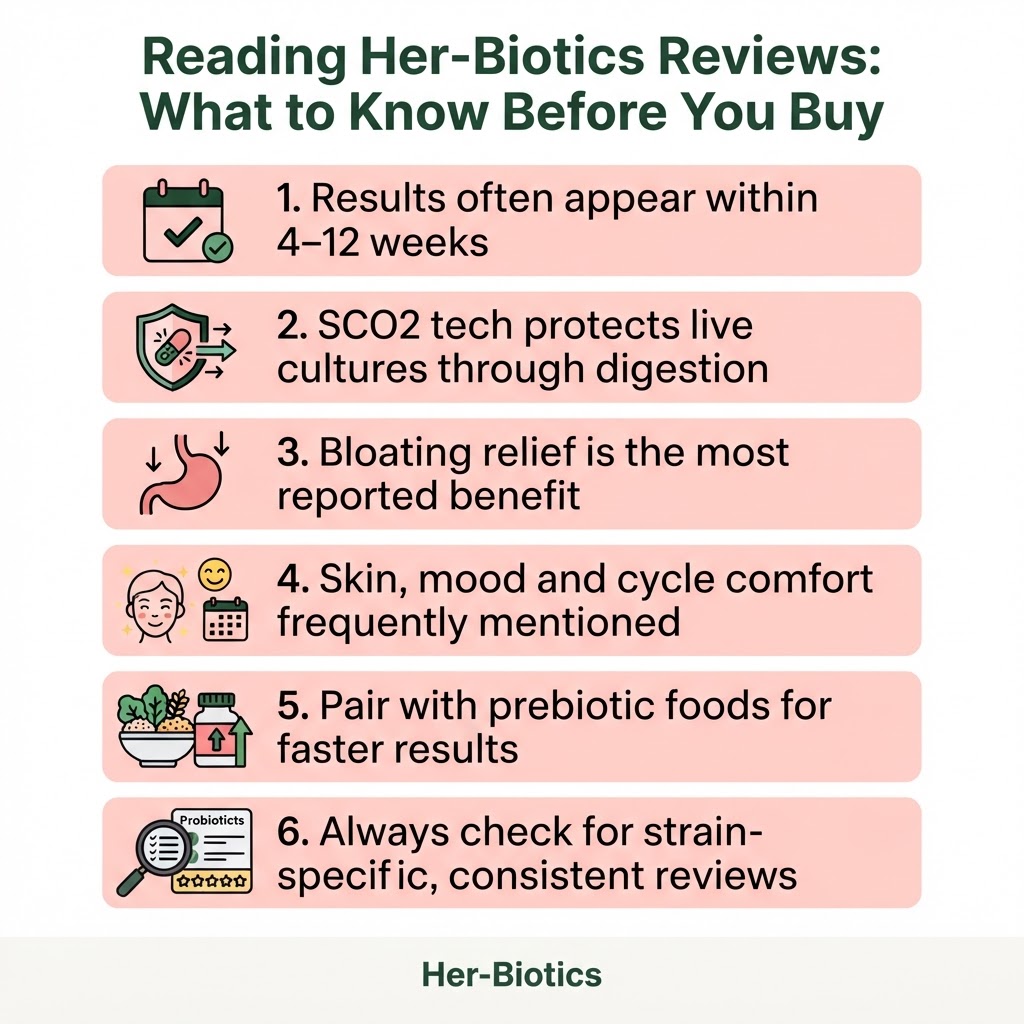
Across testimonials and feedback, a handful of themes come up again and again. None of these are guarantees — individual gut microbiomes vary — but they reflect patterns worth knowing before you start.
Digestive Comfort and Less Bloating
This is the single most frequently reported change. Women often describe feeling "lighter" or less bloated within the first few weeks. For a deeper dive into the digestive side, see Bloating, IBS and Leaky Gut: How to Finally Solve Your Digestive Issues with Probiotics.
Clearer, Calmer Skin
Skin reactivity is closely tied to gut barrier function and inflammation. Reviewers frequently mention calmer, more even-looking skin after consistent use, which lines up with research on the gut-skin connection.
Steadier Mood and Energy
The gut produces a large share of the body's serotonin and communicates directly with the brain via the vagus nerve. Many reviewers describe feeling more emotionally even, especially around stressful weeks — something we unpack in Stress, Cortisol and the Gut.
Cycle-Related Relief
Women using the PMS-focused formula often mention less bloating and steadier moods in the week before their period. This connects to the estrobolome — the collection of gut bacteria that help metabolize estrogen — covered in PMS and the Microbiome: How Gut Health Governs Your Cycle.
"Emerging evidence suggests gut microbial composition may influence estrogen metabolism and could play a role in premenstrual symptom severity." — National Center for Biotechnology Information, microbiome research summary
Setting Realistic Expectations: What the Research Says About Timelines
One thing honest reviews have in common: results aren't instant. Most clinical research on probiotic supplementation measures outcomes over 4 to 12 weeks, not days.
Factors that influence how quickly someone notices a change include:
- Baseline gut microbiome diversity
- Diet, especially fiber and prebiotic intake
- Stress levels and sleep quality
- Consistency of daily use
According to the Mayo Clinic's overview of probiotics, effects are strain-specific and individual response varies considerably — which is exactly why some reviewers report changes in two weeks while others need six to eight. Pairing a probiotic with prebiotic-rich foods tends to shorten that timeline for many women, since prebiotics act as fuel for the bacteria you're introducing.
How to Read Any Probiotic Review Critically
Not all reviews are created equal, and it pays to read them like a savvy consumer rather than taking every five-star rating at face value.
Watch for these signals:
- Specificity — Reviews mentioning a timeline ("after three weeks") tend to be more credible than vague praise.
- Consistency across multiple reviews — If dozens of unrelated people mention the same specific change (like less bloating), that pattern is more meaningful than one glowing outlier.
- Realistic language — Be cautious of reviews or marketing claiming a product can
Enjoyed this? Get the next one first.
Science made simple, delivered to your inbox. No spam, unsubscribe anytime.