

By Dr. Chomba Chuma, MD & Founder of Her-Biotics | September 7, 2026
If you've ever spent a restless night staring at the ceiling — mind racing, body exhausted but inexplicably wired — you may have blamed stress, your phone screen, or that late-night coffee. But here's what most women never consider: your gut might be at the centre of the problem.
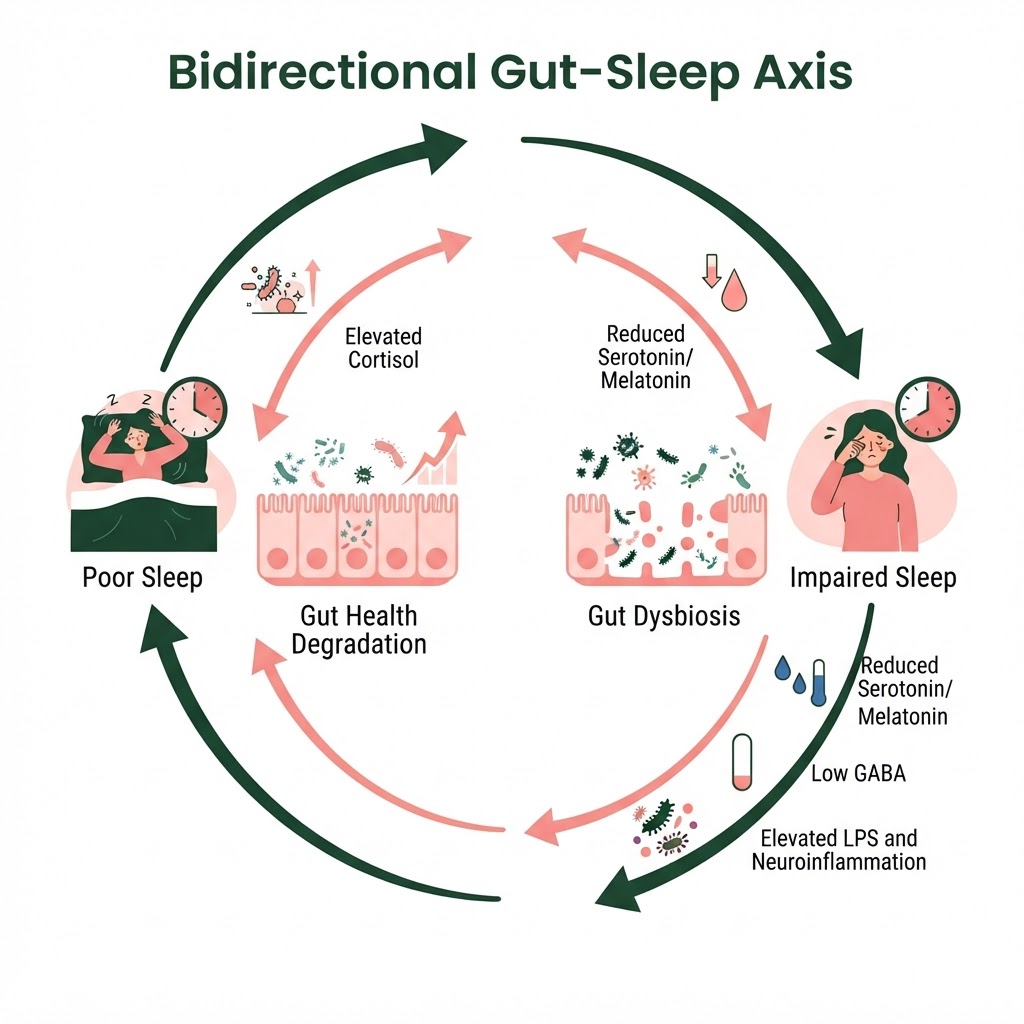
Over the past decade, a compelling body of research has revealed that the relationship between sleep quality and gut bacteria is not a one-way street. It is deeply, intricately bidirectional. Your gut influences how well you sleep. Your sleep, in turn, shapes the composition and diversity of your microbiome. Break one, and you risk unravelling the other.
As a physician and the founder of Her-Biotics, I've watched this science evolve from fringe theory to mainstream medicine — and I've seen its practical implications play out in the lives of thousands of women. Today, I want to walk you through exactly what the research says, why women are particularly vulnerable to this gut-sleep disruption, and what you can do — starting tonight — to restore balance.
1. The Gut-Brain Axis: Your Body's Hidden Communication Highway
To understand why your gut affects your sleep, you first need to appreciate the extraordinary communication network known as the gut-brain axis. This is a bidirectional signalling system connecting your enteric nervous system (the 500 million neurons lining your gastrointestinal tract) with your central nervous system via the vagus nerve, the immune system, and a rich network of hormones and neurotransmitters.
What lives inside this gut? Approximately 38 trillion microbial cells — bacteria, fungi, viruses, and archaea — collectively known as your gut microbiome. These microorganisms are not passive passengers. They are metabolically active, producing compounds that directly influence your brain chemistry, your stress response, your inflammation levels, and yes, your ability to fall and stay asleep.
The Neurotransmitter Connection
Here is one of the most striking facts in modern neuroscience:
Approximately 90–95% of the body's serotonin is produced in the gut, not the brain. Serotonin is the precursor to melatonin — the hormone that governs your sleep-wake cycle. Without a healthy gut microbiome, serotonin synthesis is compromised, and with it, your body's ability to produce adequate melatonin at night.
But serotonin is only part of the story. Your gut bacteria also influence the production of GABA (gamma-aminobutyric acid), the primary inhibitory neurotransmitter in your central nervous system. GABA is essentially your brain's natural "calm down" signal. Low GABA activity is directly associated with anxiety, insomnia, and the kind of racing, hyperactive mind that keeps so many women awake at night.
Specific probiotic strains — particularly Lactobacillus rhamnosus and Bifidobacterium longum — have been shown in preclinical and clinical studies to modulate GABA receptor expression in the brain. A landmark study published in the British Journal of Pharmacology demonstrated that L. rhamnosus JB-1 significantly altered GABA receptor distribution in mice and reduced stress-induced anxiety and depression-like behaviours.
For a deeper look at the strains we've selected based on this science, visit our Science Page.
2. Circadian Rhythm and the Microbiome: A Clock Within a Clock
Your body operates on a circadian rhythm — a roughly 24-hour internal clock that regulates everything from cortisol release and body temperature to digestion and immune function. What most people don't realise is that your gut microbiome has its own circadian oscillation.
Groundbreaking research from the Weizmann Institute of Science, published in Cell (Thaiss et al., 2014), demonstrated that microbial communities in the gut undergo rhythmic compositional and functional fluctuations across the 24-hour cycle. These microbial rhythms are entrained by the host's feeding schedule, light exposure, and hormonal cues.
When your circadian rhythm is disrupted — through shift work, jet lag, irregular sleep schedules, or chronic stress — the microbial clock is disrupted too. This leads to:
- Reduced microbial diversity, a key marker of gut health
- Overgrowth of pro-inflammatory bacterial species
- Impaired intestinal barrier integrity ("leaky gut"), allowing bacterial endotoxins to enter the bloodstream
- Dysregulated production of short-chain fatty acids (SCFAs), which play a critical role in immune modulation and brain health
Conversely, when the microbiome is unhealthy or dysbiotic, it feeds disruptive signals back to the central circadian clock — creating a self-perpetuating cycle of poor sleep and poor gut health.
A 2019 review in Sleep Medicine Reviews concluded: "The gut microbiota influences the host circadian clock through microbial metabolites, immune signalling, and the autonomic nervous system — suggesting that microbiome-targeted interventions may offer a novel therapeutic avenue for circadian and sleep disorders."
You can read the full review here: Sleep Medicine Reviews — Gut Microbiota and Circadian Rhythms
3. How Poor Sleep Damages Your Gut (And Vice Versa)
This is where the bidirectionality becomes starkly real — and for many women, deeply personal.
What Sleep Deprivation Does to Your Gut
Even a single night of poor sleep has measurable consequences for your gut:
- Increased intestinal permeability: Sleep deprivation elevates cortisol, which degrades the tight junctions between intestinal epithelial cells, increasing gut permeability.
- Reduced microbial diversity: A study from Uppsala University (published in Molecular Metabolism, 2016) found that even two nights of partial sleep deprivation significantly altered the composition of the gut microbiome, reducing the ratio of Firmicutes to Bacteroidetes in ways that mirror changes seen in obese individuals.
- Elevated systemic inflammation: Poor sleep increases circulating levels of pro-inflammatory cytokines (IL-6, TNF-alpha), which further disrupt the gut lining and alter microbial behaviour.
- Impaired gut motility: Disrupted sleep affects the migrating motor complex — the gut's self-cleaning mechanism — leading to bloating, constipation, and discomfort.
What an Unhealthy Gut Does to Your Sleep
On the flip side, gut dysbiosis creates a neurochemical environment that is fundamentally hostile to restful sleep:
- Reduced serotonin and melatonin precursors impair the body's ability to initiate and maintain sleep
- Low GABA activity keeps the nervous system in a state of hyperarousal
- Elevated lipopolysaccharides (LPS) from gram-negative bacteria cross the blood-brain barrier and activate neuroinflammatory pathways linked to insomnia and depression
- Dysregulated tryptophan metabolism — tryptophan is the amino acid precursor to serotonin and melatonin; gut bacteria heavily influence whether tryptophan is directed toward serotonin synthesis or toward kynurenine pathways associated with inflammation and mood disorders
4. Why Women Are Uniquely Vulnerable
While gut-sleep disruption affects everyone, women face a set of compounding biological factors that make this cycle particularly difficult to escape.
Hormonal Fluctuations Across the Lifespan
Estrogen and progesterone directly influence both gut motility and sleep architecture. Progesterone has GABAergic properties — meaning it acts on GABA receptors to promote calm and sleep. As progesterone fluctuates during the luteal phase of the menstrual cycle, during perimenopause, and drops sharply at menopause, women often experience a simultaneous worsening of gut symptoms and sleep disturbance.
Estrogen also plays a role in maintaining healthy mucus layers in the gut and modulating the composition of the microbiome. Research has identified a specialised subset of gut bacteria — collectively called the estrobolome — that metabolise and recirculate oestrogens. A dysbiotic estrobolome can result in oestrogen imbalance, which further disrupts both sleep and gut function.
The Stress-Cortisol-Gut Trifecta
Women report higher rates of anxiety, perceived stress, and insomnia than men across virtually every demographic study. Elevated cortisol — the body's primary stress hormone — is profoundly disruptive to gut health, increasing intestinal permeability and altering microbial composition. It also suppresses melatonin secretion and delays sleep onset.
This creates a particularly cruel cycle for many women: stress damages the gut, the damaged gut reduces calming neurotransmitters, lower GABA and serotonin amplify anxiety and sleeplessness, and the resulting sleep deprivation raises cortisol further.
For women navigating PMS-related sleep disruption, our Her-Biotics PMS Support formula combines our SCO2-encapsulated probiotic blend with Magnesium Glycinate, Vitamin B6, and Chasteberry — nutrients specifically chosen to support progesterone balance, GABA activity, and menstrual cycle regularity.
5. The Science of Probiotics for Sleep: What the Evidence Actually Shows
So can probiotics for sleep actually make a measurable difference? The evidence is growing — and it's encouraging.
Key Clinical Findings
Lactobacillus and GABA production: Multiple in vitro and animal studies have demonstrated that certain Lactobacillus strains produce GABA directly. A 2019 human randomised controlled trial published in Beneficial Microbes found that fermented milk containing Lactobacillus casei Shirota significantly improved sleep quality and reduced fatigue in medical students under examination stress — a population with measurably elevated cortisol.
Bifidobacterium and tryptophan: A 2021 study in JCI Insight found that supplementation with Bifidobacterium longum 1714 reduced stress-related neural responses and improved sleep efficiency in a cohort of healthy adults, with proposed mechanisms including modulation of the tryptophan-serotonin-melatonin pathway. You can view the original publication here: JCI Insight — B. longum 1714 and stress
SCFAs and sleep regulation: Short-chain fatty acids, particularly butyrate — produced when beneficial bacteria ferment dietary fibre — have been shown to promote slow-wave (deep) sleep in animal models by influencing orexin neurons and sleep-regulating circuits in the hypothalamus.
Reduction of LPS-mediated neuroinflammation: Probiotic supplementation has been shown in multiple trials to reduce circulating LPS levels and inflammatory markers, which may reduce neuroinflammation-driven insomnia.
What This Means Practically
The science doesn't suggest that probiotics are a sleeping pill replacement. What it does suggest is that a healthy, diverse microbiome — particularly one rich in Lactobacillus and Bifidobacterium species — creates the biochemical conditions in which restful sleep becomes significantly more achievable. Think of it as removing the obstacles that your nervous system faces every night.
Our Her-Biotics Original formula features 16 clinically-informed probiotic strains delivered via patented SCO2 (supercritical carbon dioxide) microencapsulation technology — a process that protects bacterial viability through stomach acid, delivering 1000× more viable probiotics to the gut compared to standard unencapsulated supplements. This matters enormously, because a probiotic that doesn't survive transit to the colon simply cannot influence the neurotransmitter pathways we've been discussing.
6. Practical Strategies to Restore the Gut-Sleep Cycle
Knowledge is only as useful as what you do with it. Here are evidence-based strategies to begin repairing the gut-sleep relationship:
Nutritional Foundations
- Increase dietary fibre diversity: Aim for 30+ different plant foods per week. Diverse fibre feeds diverse microbes, boosting SCFA production and microbial richness.
- Prioritise tryptophan-rich foods in your evening meal: turkey, eggs, pumpkin seeds, tofu, and oats all provide the raw material for serotonin and melatonin synthesis.
- Limit ultra-processed foods and added sugars: These selectively feed pathogenic bacteria and displace beneficial strains.
- Time your eating with your circadian rhythm: Avoid large meals within 3 hours of sleep. Late eating disrupts the gut's own circadian oscillation and impairs melatonin release.
Sleep Hygiene That Supports Your Microbiome
- Maintain a consistent sleep-wake schedule, even on weekends. This protects the microbial circadian clock as much as your own.
- Prioritise darkness in the evening: Light suppresses melatonin production. Use blue-light blocking strategies after 8pm.
- Manage cortisol with evening wind-down practices: Restorative yoga, breathwork (particularly extended exhale techniques that activate the vagus nerve), and magnesium supplementation have all demonstrated measurable effects on evening cortisol.
Targeted Supplementation
- High-quality, multi-strain probiotics: Choose formulas with demonstrated clinical strains and superior delivery mechanisms. See our full range at Shop All Formulas.
- Magnesium Glycinate: One of the most bioavailable forms of magnesium, it supports GABA receptor function and has robust evidence for improving sleep onset and quality.
- Vitamin B6: Essential cofactor in serotonin synthesis from tryptophan — and often depleted in women taking oral contraceptives.
For women in perimenopause or post-menopause experiencing sleep disruption alongside other menopausal symptoms, our Her-Biotics Menopause Support formula integrates our probiotic core with Black Cohosh, Red Clover, Sage Leaf, and Vitamin D3/K2 — a combination designed to address the hormonal, inflammatory, and microbiome-level drivers of menopausal insomnia simultaneously.
7. Putting It All Together: A New Framework for Women's Sleep Health
The traditional conversation around sleep hygiene — screens, caffeine, bedtime routines — is valuable but incomplete. It treats sleep as a brain problem when it is, in fact, a whole-body systems problem in which the gut plays a starring role.
For women especially, the interplay between circadian rhythm, gut bacteria, melatonin, GABA, and sex hormones creates a uniquely complex landscape. Chronic sleep problems are rarely about willpower or routine alone. They are frequently rooted in biochemical deficits that originate in the gut.
This is why the emerging field of psychobiotics — probiotics and prebiotics that exert measurable effects on brain function and mental health — is one of the most exciting areas in women's medicine today. We are at the beginning of understanding just how profoundly the microbes within us govern the quality of our rest, our resilience, and our mental clarity.
To stay current with the latest research on gut health, hormones, and women's wellbeing, explore our editorial library at Radiance Hub — where we translate cutting-edge science into actionable guidance for real women's lives.
Start Tonight: Nourish Your Gut for Deeper, More Restorative Sleep
If poor sleep has been your companion for weeks, months, or years, I want you to know this: your body is not broken. It is asking for support at the root level — and your gut is often where that work begins.
Her-Biotics Original was formulated precisely for women who need comprehensive microbiome restoration as a foundation for every other aspect of their health — including sleep. With 16 targeted probiotic strains, our unmatched SCO2 microencapsulation technology ensuring 1000× superior gut delivery, and a synergistic blend of B-vitamins, Vitamin C, E, and Zinc to support the biochemical pathways your nervous system depends on, it offers a scientifically grounded starting point for the gut-sleep repair process. For women with hormonal sleep disruption, explore Her-Biotics PMS Support or Her-Biotics Menopause Support to address the full picture. Visit Shop All Formulas to find the formula that speaks to where you are right now. Your best sleep may be closer than you think — and it may well begin in your gut.
Dr. Chomba Chuma, MD, is a women's health physician and the founder of Her-Biotics. The information in this article is intended for educational purposes and does not constitute medical advice. Please consult your healthcare provider before beginning any new supplement regimen.
Enjoyed this? Get the next one first.
Science made simple, delivered to your inbox. No spam, unsubscribe anytime.