

By Dr. Chomba Chuma, MD & Founder of Her-Biotics | July 31, 2026
When I founded Her-Biotics, I had one guiding principle: a supplement should never exist in isolation. The most advanced probiotic formulation in the world — and I genuinely believe ours is — can only perform at its full potential when it has the right environment to work in. And that environment? It starts on your plate.
I've spent years in clinical practice watching women invest in high-quality probiotic supplements, only to see underwhelming results. More often than not, the missing piece wasn't the probiotic itself. It was prebiotics — the dietary fuel that keeps your beneficial bacteria alive, thriving, and multiplying long after you've swallowed your capsule.
In this article, I want to walk you through the science of prebiotic-probiotic synergy, show you exactly which foods will amplify the benefits of your supplement, and help you understand why feeding your microbiome is one of the most empowering things you can do for your long-term health.
What Are Prebiotics, and Why Are They Non-Negotiable?
Let's start with the basics, because this distinction matters enormously.
Probiotics are live microorganisms — bacteria and yeasts — that confer a health benefit when consumed in adequate amounts. They are the workers.
Prebiotics are a category of non-digestible dietary compounds — primarily certain types of fiber — that selectively stimulate the growth and activity of beneficial bacteria in the gut. They are the fuel.
Without prebiotics, your probiotic bacteria have nothing to eat. They arrive in your gut, find a sparse nutritional landscape, and struggle to colonise effectively. With prebiotics, those same bacteria are handed everything they need to establish themselves, reproduce, and get to work on your behalf.
"Prebiotics are selectively utilised by host microorganisms conferring a health benefit. The most well-established prebiotics are fructooligosaccharides (FOS), galactooligosaccharides (GOS), and inulin — all of which promote Bifidobacterium and Lactobacillus species." — Gibson et al., Nature Reviews Gastroenterology & Hepatology, 2017
This is precisely why the scientific community now champions the concept of synbiotics — the strategic pairing of prebiotics and probiotics to create effects greater than either could achieve alone. It's not a trend. It's evidence-based nutritional science.
The Science of Probiotic Synergy: What Happens in Your Gut
When a probiotic supplement reaches your large intestine intact — a feat made significantly more achievable with Her-Biotics' patented SCO2 microencapsulation technology, which delivers 1000× more viable bacteria to the gut compared to standard supplements — those bacteria face an immediate challenge: competition.
Your gut is already home to trillions of microorganisms. Beneficial strains need to compete with less helpful ones for space and resources. This is where probiotic synergy with prebiotic foods becomes the deciding factor.
Here's what the research tells us happens when you combine a high-quality probiotic with adequate prebiotic fiber intake:
- Enhanced colonisation: Prebiotic substrates give beneficial strains like Lactobacillus acidophilus and Bifidobacterium longum a competitive metabolic advantage, helping them establish more quickly and persistently.
- Increased short-chain fatty acid (SCFA) production: When gut bacteria ferment prebiotic fiber, they produce SCFAs like butyrate, propionate, and acetate. Butyrate, in particular, is the primary energy source for colonocytes (your colon cells) and has potent anti-inflammatory properties.
- Improved gut barrier integrity: SCFAs help maintain the tight junction proteins that keep your gut lining intact — critical for preventing the low-grade systemic inflammation linked to everything from bloating to hormonal disruption.
- Greater microbiome diversity: A diverse, well-fed microbiome is a resilient one. Research consistently shows that higher microbiome diversity is associated with better immune function, mood regulation, metabolic health, and hormonal balance.
For women specifically, this matters profoundly. Your gut microbiome plays a direct role in oestrogen metabolism through what researchers call the estrobolome — the collection of gut bacteria responsible for processing and recirculating oestrogen. A well-nourished microbiome means more balanced oestrogen levels, which has downstream effects on your cycle, mood, skin, bone density, and menopausal transition.
Learn more about the science underpinning our formulations on the Science Page.
The Top Prebiotic Foods to Eat Alongside Your Probiotic Supplement
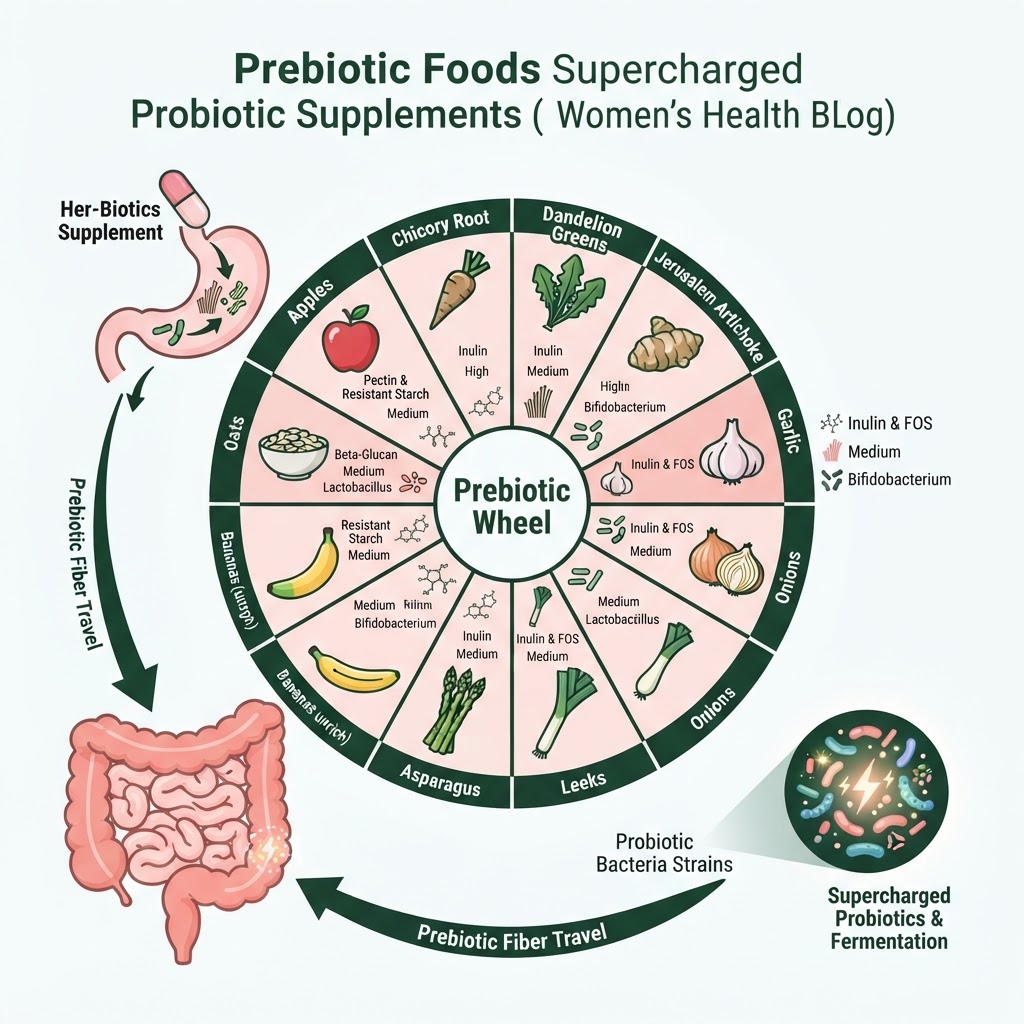
Not all fiber is prebiotic fiber. To be classified as a prebiotic, a compound must resist digestion in the stomach and small intestine, be fermented by gut bacteria, and selectively stimulate beneficial bacterial growth. Here are the foods that make the grade — and deserve a regular place in your diet.
1. Garlic and Onions
Garlic is one of the most potent prebiotic foods available. It contains inulin and fructooligosaccharides (FOS), both of which selectively feed Bifidobacterium species — the very strains that feature prominently in our Her-Biotics Original formula. Onions, leeks, and shallots belong to the same Allium family and offer similar prebiotic benefits.
Practical tip: You don't need large amounts. Even half a clove of raw garlic daily provides meaningful prebiotic activity. Add it raw to dressings or stir it through food at the end of cooking to preserve its bioactive compounds.
2. Jerusalem Artichoke
Gram for gram, Jerusalem artichoke (also called sunchoke) contains one of the highest concentrations of inulin of any whole food — approximately 14–19g per 100g. It is a true prebiotic powerhouse and has been shown in clinical studies to significantly increase Bifidobacterium populations in as little as three weeks of regular consumption.
A word of caution: if you are new to prebiotic-rich foods, introduce Jerusalem artichoke gradually. The rapid fermentation activity can cause temporary bloating as your microbiome adjusts — a completely normal and transient response.
3. Green (Unripe) Bananas and Cooled Cooked Potatoes
One of the most underappreciated prebiotic sources is resistant starch. This type of starch resists digestion in the small intestine and reaches the colon intact, where it acts as a powerful prebiotic substrate.
- Green bananas are rich in resistant starch. As they ripen, this starch converts to simple sugars — so the greener, the better for prebiotic benefit.
- Cooled cooked potatoes undergo a process called retrogradation when refrigerated, converting a portion of their digestible starch into resistant starch. Yesterday's boiled potatoes in a salad are genuinely more prebiotic than freshly cooked ones.
4. Chicory Root
Chicory root is the gold-standard source of prebiotic inulin — so much so that it is the primary commercial source of inulin used in food manufacturing. It's also the root from which the coffee alternative of the same name is derived. Incorporating chicory root tea or chicory-based coffee alternatives is an easy and enjoyable way to increase your prebiotic intake.
5. Legumes: Lentils, Chickpeas, and Black Beans
Legumes are double-duty nutritional champions. They contain galactooligosaccharides (GOS) — one of the most clinically validated prebiotic compounds — along with substantial fiber and plant-based protein. A 2021 clinical trial published in Gut Microbes found that regular legume consumption significantly increased microbiome diversity and Lactobacillus abundance over a 12-week period.
"Increasing dietary fiber intake from diverse sources, particularly legumes, consistently predicts greater gut microbiome alpha-diversity — a marker strongly associated with metabolic and immune resilience." — Dahl et al., Gut Microbes, 2021
6. Asparagus
Asparagus contains meaningful amounts of inulin and is also a source of folate — particularly valuable for women of reproductive age. It's versatile, widely available, and one of the most gut-friendly vegetables you can eat. Lightly steaming rather than boiling preserves more of its prebiotic compounds.
7. Oats
Oats contain beta-glucan, a soluble fiber with well-documented prebiotic properties and additional benefits for cardiovascular health and blood sugar regulation. They also provide arabinoxylan, another fermentable fiber shown to stimulate Bifidobacterium and Lactobacillus growth. A bowl of steel-cut oats is one of the most evidence-based ways to start a gut-supportive day.
Fermented Foods: Nature's Original Probiotic Delivery System
While prebiotic fiber feeds your existing beneficial bacteria, fermented foods deliver additional live microorganisms — acting as a natural complement to your probiotic supplement. I want to be clear about the distinction, because it matters clinically.
Fermented foods are not a replacement for a high-quality, multi-strain probiotic supplement. The bacterial counts in most fermented foods are inconsistent, often poorly characterised, and — crucially — not protected against the acidic environment of the stomach the way our SCO2-encapsulated strains are. However, they are a genuinely valuable addition to a gut-supportive diet and contribute to the broader goal of microbiome diversity.
Best Fermented Foods to Include Regularly
- Kefir: A fermented dairy or plant-based drink containing up to 50 different microbial species. One of the most microbiome-diverse fermented foods available. Research supports its role in improving lactose digestion, reducing inflammatory markers, and supporting immune function.
- Plain live-culture yoghurt: Look for the phrase "live and active cultures" on the label. Avoid varieties with high added sugar, which counteracts the benefit.
- Sauerkraut and kimchi: Lacto-fermented cabbage preparations rich in Lactobacillus species and vitamin C. Buy refrigerated, unpasteurised versions — heat processing destroys the live cultures.
- Tempeh: Fermented soya beans with a firm texture and nutty flavour. An excellent plant-based protein source and a meaningful source of beneficial microorganisms.
- Miso: Fermented soya paste used in Japanese cuisine. Rich in beneficial organisms and glutamate compounds. Add it to sauces, dressings, and soups after cooking to preserve the live cultures.
- Kombucha: Fermented tea containing a range of bacteria and yeasts. A reasonable fermented food choice, though bacterial counts vary widely between brands.
A landmark 2021 study from Stanford University found that a diet high in fermented foods increased microbiome diversity and decreased markers of immune activation in healthy adults — effects that were not seen in a high-fiber diet alone. This underscores an important nuance: fermented foods and prebiotic fiber work through different mechanisms and are most powerful when combined.
For women navigating PMS, menopause, or high physical demands, the combination of fermented foods, prebiotic fiber, and a targeted Her-Biotics formula creates a genuinely comprehensive approach to gut and hormonal health. Explore our full range at Shop All Formulas.
Building a Prebiotic-Rich Daily Routine: A Practical Framework
Knowing which foods are prebiotic is one thing. Consistently including them in your daily life is another. Here's a realistic framework I recommend to my patients and to the Her-Biotics community.
Aim for 25–38g of Total Fiber Daily (with Diversity as the Goal)
Most women consume fewer than 15g of fiber daily — well below the recommended intake. But quantity isn't the only goal. Diversity matters enormously. Research from the American Gut Project found that people who consumed 30 or more different plant foods per week had significantly more diverse gut microbiomes than those who consumed 10 or fewer.
Thirty plant foods sounds daunting. It isn't when you count smartly: herbs, spices, nuts, seeds, legumes, whole grains, fruits, and vegetables all count.
A Sample Day of Prebiotic-Rich Eating
Breakfast: Steel-cut oats topped with a sliced green banana, a tablespoon of ground flaxseed, and a dollop of live-culture yoghurt
Lunch: Large salad with chickpeas, thinly sliced raw onion, asparagus, a warm boiled egg, and a garlic-tahini dressing
Snack: A small portion of kefir with a handful of mixed berries
Dinner: Lentil dahl with garlic and onion base, served with cooled-and-reheated rice (for resistant starch) and a side of kimchi
This single day provides an estimated 30–35g of fiber, multiple prebiotic fiber types, fermented food diversity, and robust nutritional variety — a foundation upon which your Her-Biotics Original can perform at its very best.
Timing Your Supplement with Food
For maximum benefit, take your Her-Biotics capsule with or shortly before a prebiotic-rich meal. The presence of food in the stomach buffers against gastric acid, and our SCO2 encapsulation provides an additional protective barrier — meaning our strains arrive in the colon with viability rates that standard supplements simply cannot match. The two mechanisms of protection work synergistically.
For more evidence-based guidance on gut health, hormones, and women's nutrition, visit our Radiance Hub — a free resource library built for women who want to understand the science behind their health.
Special Considerations for Different Life Stages
The relationship between prebiotic foods and probiotic supplements looks somewhat different depending on where you are in your hormonal journey.
If you experience PMS or cycle-related symptoms: Focus particularly on magnesium-rich prebiotic foods (legumes, leafy greens, whole oats) alongside your Her-Biotics PMS Support. Magnesium works synergistically with the Chasteberry and Vitamin B6 in that formula, and a well-fed gut microbiome supports healthier oestrogen metabolism throughout your cycle.
If you're approaching or navigating perimenopause and menopause: The estrobolome becomes particularly significant at this life stage, as declining oestrogen makes its gut-mediated recirculation more important. Prioritise a wide variety of fiber sources and include phytoestrogen-rich fermented foods like miso and tempeh, which complement the botanicals in our Menopause Support formula.
If you're physically active: Resistant starch and legume-based prebiotics support muscle glycogen replenishment and reduce gut permeability associated with high-intensity training — an ideal complement to the L-Glutamine and Ashwagandha in Her-Biotics Sport.
If you're 50 and beyond: Research suggests that microbiome diversity naturally declines with age. Doubling down on prebiotic diversity — especially resistant starches and beta-glucans — alongside the NAD+ and antioxidant-rich Her-Biotics Ageless 50+ formula is one of the most evidence-informed investments you can make in your longevity.
The Bottom Line: Your Supplement and Your Diet Are Partners
I want to leave you with a conviction that has shaped everything about how Her-Biotics was built: a probiotic supplement is not a substitute for a nourishing diet — it is a powerful amplifier of one.
The women who see the most transformative results with Her-Biotics are consistently the ones who treat their supplement as part of a broader gut-health strategy: eating diversely, including prebiotic-rich whole foods daily, incorporating fermented foods regularly, managing stress, prioritising sleep, and staying well hydrated.
Our SCO2 microencapsulation technology ensures that 1000× more viable bacteria reach your gut than standard supplements can deliver. But what those bacteria do when they arrive — how effectively they colonise, how robustly they diversify your microbiome, how powerfully they influence your hormones, immunity, energy, and mood — that depends on the ecosystem you've built for them through your food choices.
You have more power over your gut health than you may realise. And it begins at your next meal.
Ready to complete the picture? Browse our full range of targeted women's probiotic formulas — each one built with the same commitment to delivery technology, clinical evidence, and women's specific biology — at Shop All Formulas. Whether you're managing your cycle, supporting an active lifestyle, navigating menopause, or investing in long-term vitality, there is a Her-Biotics formula designed to work in perfect synergy with the prebiotic-rich diet you're now equipped to build.
Dr. Chomba Chuma, MD, is a women's health physician and the founder of Her-Biotics. She writes regularly on gut health, hormonal wellbeing, and evidence-based nutrition for women. All content is intended for informational purposes and does not constitute personalised medical advice.
Enjoyed this? Get the next one first.
Science made simple, delivered to your inbox. No spam, unsubscribe anytime.