

By Dr. Chomba Chuma, MD & Founder, Her-Biotics | July 8, 2026
If you've been diagnosed with PCOS, you've probably heard the standard conversation: manage your weight, consider metformin, perhaps try the pill. And while those tools have their place, they rarely address the why behind your symptoms. After years of clinical practice and deep immersion in the science of the female microbiome, I've become increasingly convinced that for many women, the root of PCOS doesn't begin in the ovaries — it begins in the gut.
This isn't a fringe theory. Over the past decade, a growing body of peer-reviewed research has begun mapping the intricate relationship between gut bacteria, insulin resistance, androgens, and the full symptomatic picture of PCOS. What's emerging is a paradigm shift — and it's one that I believe every woman with PCOS deserves to understand.
Let's go deep.
What Is PCOS — And Why Is the Standard Model Failing Women?
Polycystic ovary syndrome (PCOS) is the most common endocrine disorder in women of reproductive age, affecting approximately 8–13% of women globally, according to the World Health Organization. Despite its prevalence, it remains chronically underdiagnosed — with many women waiting years before receiving answers.
The classic diagnostic picture includes:
- Irregular or absent menstrual cycles (oligo- or anovulation)
- Elevated androgens (excess testosterone causing acne, hair thinning, hirsutism)
- Polycystic ovarian morphology on ultrasound
- Insulin resistance in up to 70% of cases, regardless of body weight
- Chronic low-grade inflammation
Here's the problem with the conventional model: it treats PCOS primarily as an ovarian or hormonal disorder and manages symptoms in isolation. Acne gets a cream. Irregular periods get synthetic hormones. Insulin resistance gets metformin. But none of this addresses the systemic environment in which PCOS thrives — and increasingly, that environment includes a profoundly disrupted microbiome.
The Gut-Hormone Axis: How Your Microbiome Regulates Your Hormones
Your gut is not simply a digestive organ. It is an endocrine organ. The 100 trillion microorganisms residing in your gastrointestinal tract — collectively known as the microbiome — produce neurotransmitters, regulate immune responses, metabolise nutrients, and critically, modulate sex hormone levels.
The Estrobolome: Your Gut's Hormone Recycling System
A specialised subset of gut bacteria, collectively termed the estrobolome, produce an enzyme called beta-glucuronidase. This enzyme deconjugates oestrogens in the gut, allowing them to be reabsorbed into circulation. When the estrobolome is healthy and diverse, oestrogen metabolism is balanced. When gut dysbiosis disrupts this system, oestrogen can be either excessively reabsorbed or rapidly eliminated — contributing to hormonal imbalances directly relevant to PCOS.
Short-Chain Fatty Acids and Androgen Production
Healthy gut bacteria ferment dietary fibre to produce short-chain fatty acids (SCFAs) — particularly butyrate, propionate, and acetate. These SCFAs:
- Reduce systemic inflammation by reinforcing gut barrier integrity
- Improve insulin sensitivity at the cellular level
- Modulate the hypothalamic-pituitary-ovarian (HPO) axis — the central command system for reproductive hormones
When SCFA-producing bacteria are depleted (as consistently seen in women with PCOS), the downstream effects ripple across every system involved in hormonal regulation.
"Women with PCOS showed significantly lower gut microbiota diversity and reduced abundance of SCFA-producing genera including Lactobacillus and Bifidobacterium compared to healthy controls." — Liu et al., Journal of Clinical Endocrinology & Metabolism, 2022
PCOS and Gut Dysbiosis: What the Research Actually Shows
The evidence linking PCOS to disrupted gut bacteria has become remarkably consistent. Here's what the science tells us:
Reduced Microbial Diversity
Multiple studies have demonstrated that women with PCOS have significantly lower gut microbiome diversity than women without the condition. Diversity is the hallmark of a healthy microbiome — a wider variety of species creates resilience, functional redundancy, and better metabolic regulation.
A landmark 2019 meta-analysis published in Frontiers in Endocrinology analysed gut microbiota profiles across multiple PCOS cohorts and found consistent depletion of Lactobacillus, Bifidobacterium, and Faecalibacterium prausnitzii — three of the most critically important genera for metabolic and immune health.
Elevated LPS and Leaky Gut
Gut dysbiosis in PCOS is frequently accompanied by increased intestinal permeability — commonly known as leaky gut. When the gut lining is compromised, lipopolysaccharides (LPS) — toxic fragments from gram-negative bacteria — leak into the bloodstream, triggering a state of chronic low-grade inflammation.
This inflammatory cascade has direct consequences for PCOS:
- LPS activates toll-like receptor 4 (TLR4), promoting insulin resistance
- Elevated inflammatory cytokines (TNF-α, IL-6, IL-1β) disrupt ovarian follicular development
- Chronic inflammation stimulates adrenal androgen production, worsening hyperandrogenism
The Androgen-Dysbiosis Feedback Loop
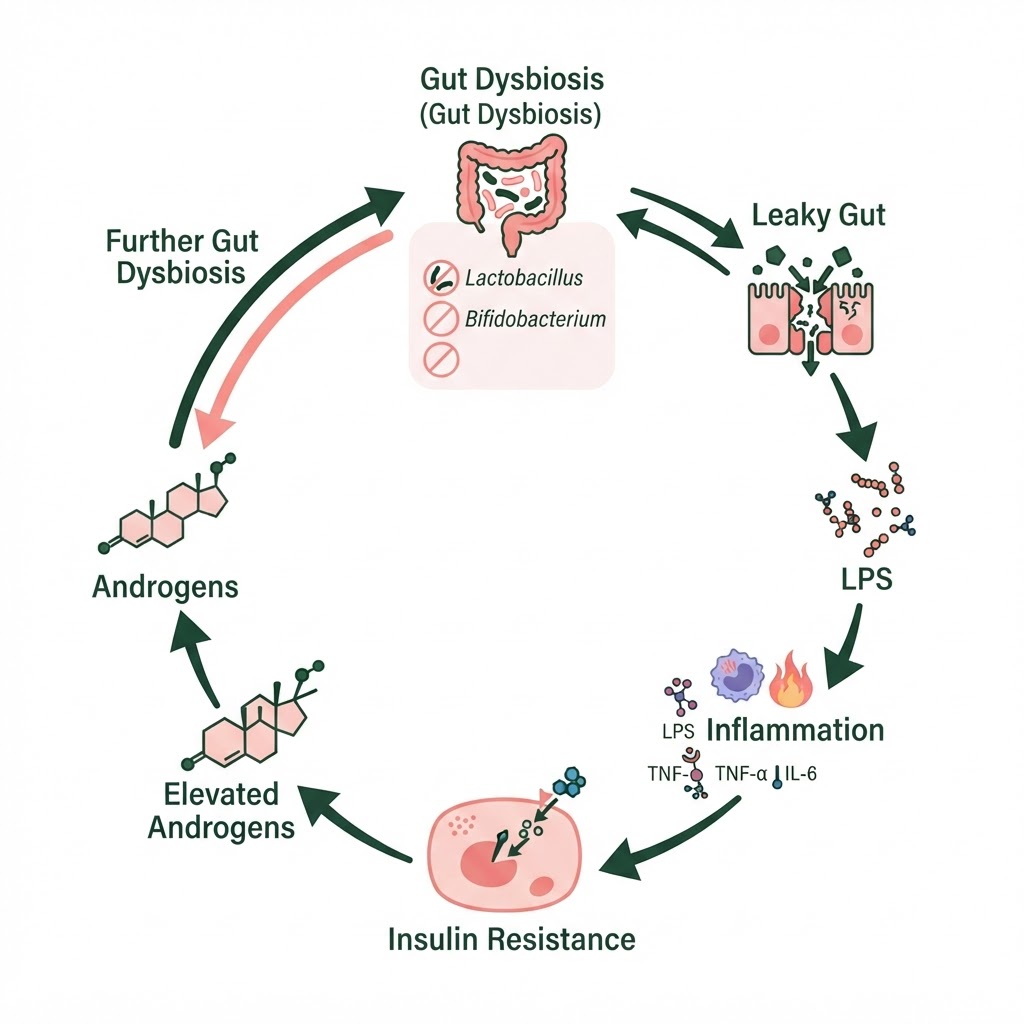
Here's where it gets particularly important: not only does dysbiosis worsen PCOS, but elevated androgens (excess testosterone) further damage the microbiome — creating a self-perpetuating cycle. Animal studies have demonstrated that testosterone administration directly reduces microbial diversity and depletes Lactobacillus populations. This means that in PCOS, the gut and the hormones are locked in a damaging bidirectional relationship.
Breaking this cycle is where targeted probiotic intervention becomes powerful.
Insulin Resistance: The Gut-Metabolic Link You Cannot Ignore
Insulin resistance is present in approximately 65–70% of women with PCOS — and it is arguably the most metabolically dangerous feature of the condition, increasing long-term risk for type 2 diabetes, cardiovascular disease, and endometrial cancer.
What most clinicians don't discuss is how profoundly gut health drives insulin resistance in PCOS.
How Dysbiosis Creates Insulin Resistance
The pathway looks like this:
- Dysbiotic gut bacteria produce excess LPS and reduce SCFA output
- LPS enters circulation, triggering TLR4-mediated inflammation in liver, muscle, and adipose tissue
- Inflammatory signalling (IKKβ/NF-κB pathway) directly phosphorylates insulin receptor substrate-1 (IRS-1), blocking insulin signalling
- Compensatory hyperinsulinaemia results — the pancreas produces more insulin to overcome resistance
- Excess insulin stimulates ovarian theca cells to produce more testosterone, amplifying androgen excess
- Elevated androgens further suppress ovulation and worsen gut dysbiosis
This is not a peripheral pathway — it is central to understanding why PCOS is both a metabolic and reproductive condition simultaneously. The gut is the hinge point.
The Butyrate Connection
Of particular significance is butyrate — a short-chain fatty acid produced by bacteria such as Faecalibacterium prausnitzii, Roseburia intestinalis, and Eubacterium hallii, all of which are consistently depleted in PCOS. Butyrate:
- Inhibits histone deacetylases (HDACs), reducing inflammatory gene expression
- Stimulates GLP-1 secretion from L-cells, improving insulin sensitivity
- Strengthens tight junctions in the gut lining, reducing LPS translocation
- Activates free fatty acid receptors (FFAR2/3) to enhance glucose metabolism
Restoring butyrate-producing bacteria is therefore not a wellness nicety — it is a metabolic therapeutic target in PCOS.
Probiotics for PCOS: What the Clinical Evidence Shows
Given the mechanistic links between gut bacteria and PCOS, the question becomes: can probiotics for PCOS actually make a measurable clinical difference?
The answer, increasingly, is yes — but the devil is very much in the details of which strains, which doses, and crucially, whether those probiotics survive to reach the gut.
Clinical Trials Worth Knowing
A 2018 randomised controlled trial published in the Journal of Hormones found that women with PCOS who took a multi-strain probiotic for 12 weeks experienced:
- Significant reductions in fasting insulin and HOMA-IR scores
- Decreased total testosterone levels
- Improved LDL cholesterol and triglyceride profiles
- Reduced markers of oxidative stress (MDA levels)
A 2021 systematic review in Nutrients analysing seven RCTs concluded that probiotic supplementation in PCOS consistently reduced insulin resistance, inflammatory markers (CRP, TNF-α), and androgen levels, with multi-strain formulations outperforming single-strain products.
Why Strain Selection and Survival Matter Enormously
Not all probiotics are created equal. The greatest challenge in probiotic supplementation has historically been viability — most commercially available probiotics lose 60–90% of their live bacteria before reaching the large intestine, destroyed by stomach acid and bile salts.
This is precisely why Her-Biotics was developed around our patented SCO2 (supercritical carbon dioxide) microencapsulation technology. By encapsulating each bacterial strain in a protective lipid matrix using supercritical CO₂ — a pharmaceutical-grade process — our probiotic strains arrive at the gut 1000× more viable than standard unencapsulated supplements. This isn't marketing language; it's the difference between depositing bacteria at the destination versus losing them in transit.
The strains with the strongest PCOS-relevant evidence include:
- Lactobacillus acidophilus — reduces insulin resistance and LPS translocation
- Lactobacillus rhamnosus — modulates androgen metabolism and improves BMI in PCOS
- Bifidobacterium longum — reduces inflammatory cytokines and improves glycaemic control
- Lactobacillus reuteri — shown to reduce testosterone in both animal and human studies
- Bifidobacterium breve — supports estrobolome function and oestrogen balance
All five are included in the Her-Biotics Original 16-strain formula, delivered via SCO2 encapsulation for maximum gut delivery. For women whose PCOS is particularly intertwined with hormonal cycling and PMS-type symptoms, our Her-Biotics PMS Support adds Chasteberry (Vitex agnus-castus), Magnesium Glycinate, and Vitamin B6 — all with evidence-based roles in progesterone support and androgen modulation.
You can review the full clinical rationale behind our formulations on our Science Page.
A Root-Cause Protocol: Supporting Your Microbiome With PCOS
Understanding the science is empowering, but practical application matters most. Here is a structured, evidence-informed approach to supporting the gut-PCOS axis:
1. Prioritise Microbiome-Nourishing Nutrition
The microbiome is shaped profoundly by diet. For women with PCOS:
- Increase dietary fibre (30g+ daily): Feed SCFA-producing bacteria with oats, legumes, Jerusalem artichokes, and diverse vegetables
- Embrace fermented foods: Kefir, yoghurt, kimchi, sauerkraut, and miso introduce beneficial live cultures
- Reduce ultra-processed foods and refined sugars: These selectively feed inflammatory, dysbiotic species
- Include polyphenol-rich foods: Berries, dark chocolate, green tea, and olive oil act as prebiotics, feeding beneficial bacteria
- Consider a low-glycaemic approach: Stabilising blood glucose directly reduces the hyperinsulinaemia that drives androgen excess
2. Target Gut-Specific Supplementation
- Multi-strain probiotics with verified viability: This is non-negotiable. Look for technology that guarantees delivery — our SCO2 encapsulation standard is the benchmark we've set for ourselves at Her-Biotics
- Prebiotic fibre (inulin, FOS, GOS): Selectively feeds Bifidobacterium and Lactobacillus strains
- Magnesium Glycinate: Reduces insulin resistance, supports progesterone production, and improves sleep — all relevant to PCOS. Included in Her-Biotics PMS Support
- Zinc: Reduces 5-alpha reductase activity, limiting testosterone conversion. Included in Her-Biotics Original
3. Address Inflammation Systemically
- Omega-3 fatty acids (EPA/DHA): Reduce TNF-α and IL-6, restore gut barrier integrity
- Regular movement: Exercise increases microbial diversity, improves insulin sensitivity, and reduces androgens — aim for a combination of resistance training and low-intensity cardio
- Stress management: Chronic cortisol dysregulation disrupts the gut-brain axis and worsens PCOS inflammation. Practices such as breathwork, yoga, and adequate sleep are not optional extras
4. Test, Don't Guess
If you suspect gut dysbiosis is contributing to your PCOS, comprehensive stool microbiome testing (such as GI-MAP or Genova GI Effects) can identify specific imbalances to target. Work with a functional medicine practitioner or integrative gynaecologist to interpret results in the context of your full hormonal picture.
The Bigger Picture: PCOS as a Systemic Condition
I want to close with something I say to every patient I see with PCOS: this is not your fault, and it is not just about your ovaries.
PCOS is a systemic condition with roots in inflammation, metabolic dysfunction, and — we now understand — a profoundly disrupted microbiome. The women who experience the most meaningful, lasting improvement are those who address the condition at the root: rebuilding gut health, restoring metabolic balance, and supporting the hormonal ecosystem from the inside out.
The research is still evolving, and I don't want to overstate what probiotics alone can achieve. They are not a cure. But as part of a comprehensive, root-cause strategy, restoring viable, diverse gut bacteria is one of the most impactful levers we have — and one that is dramatically underused in conventional PCOS care.
If you want to continue exploring the science of the female microbiome and hormonal health, visit our Radiance Hub — a curated library of evidence-based resources written for women who want to understand their bodies deeply.
Ready to Support Your Gut and Your Hormones?
If you're living with PCOS and ready to take a root-cause approach, Her-Biotics Original is the foundation I recommend. Our 16-strain formula — featuring L. acidophilus, L. rhamnosus, B. longum, L. reuteri, B. breve, and 11 additional evidence-selected strains — is delivered via our patented SCO2 microencapsulation technology, ensuring that the bacteria you take actually arrive where they are needed. Paired with B-vitamins, Vitamin C, Vitamin E, and Zinc, it is designed to address the inflammatory, metabolic, and hormonal dimensions of microbiome imbalance simultaneously.
For women whose PCOS symptoms are most pronounced in the luteal phase — bloating, mood shifts, breast tenderness, and cramping — Her-Biotics PMS Support builds on this foundation with Chasteberry, Evening Primrose Oil, Magnesium Glycinate, and Vitamin B6 to support progesterone balance and reduce androgen-driven inflammation throughout the cycle.
Explore both formulas and find the right fit for your body at Shop All Formulas. Because understanding your microbiome isn't just about gut health — it's about reclaiming the hormonal harmony that is your birthright.
Dr. Chomba Chuma, MD, is a women's health physician and founder of Her-Biotics. The information in this article is intended for educational purposes and does not constitute medical advice. Always consult your healthcare provider before beginning any new supplement regimen.
Enjoyed this? Get the next one first.
Science made simple, delivered to your inbox. No spam, unsubscribe anytime.