

By Dr. Chomba Chuma, MD & Founder, Her-Biotics | August 28, 2026
Every month, millions of women navigate the same exhausting cycle: bloating, irritability, crushing fatigue, tearful afternoons, and the quiet dread of knowing it's coming again. Premenstrual syndrome — PMS — affects up to 75% of menstruating women, with roughly 20–32% experiencing symptoms severe enough to disrupt daily life. Yet for decades, the conversation has stopped at hormones: too much estrogen, not enough progesterone, the inevitable monthly imbalance.
What if we've been looking at only half the picture?
As a physician and researcher, I've spent years examining the intersection of the microbiome, hormonal health, and women's wellbeing. The science emerging from this field is, frankly, remarkable — and it points firmly toward the gut as a central command centre for hormonal regulation. In this article, I want to walk you through the real biology behind PMS, explain why your gut microbiome is more involved in your menstrual cycle than you ever imagined, and show you how targeted probiotics can offer genuine, science-backed relief.
1. What Is PMS, Really? Beyond the Stereotype
PMS is not a personality flaw or a cultural joke. It is a clinically recognised, physiologically driven condition characterised by a predictable cluster of emotional, behavioural, and physical symptoms that occur during the luteal phase of the menstrual cycle — the 7–14 days between ovulation and menstruation.
The Symptom Spectrum
PMS symptoms fall into two broad categories:
Emotional and psychological symptoms:
- Mood swings and irritability
- Anxiety and low mood
- Brain fog and poor concentration
- Tearfulness and emotional sensitivity
- Social withdrawal
Physical symptoms:
- Bloating and digestive changes
- Breast tenderness
- Headaches and migraines
- Fatigue and sleep disruption
- Food cravings (particularly sugar and carbohydrates)
At its most severe, PMS becomes Premenstrual Dysphoric Disorder (PMDD), a condition that can be genuinely debilitating and affects approximately 3–8% of menstruating women.
What Drives PMS? The Hormonal Cascade
The conventional explanation centres on the rise and fall of estrogen and progesterone across the cycle. During the luteal phase, progesterone rises sharply following ovulation. Its metabolite, allopregnanolone, interacts with GABA receptors in the brain — the same receptors targeted by anti-anxiety medications. Women with PMS appear to have an abnormal neurological sensitivity to these hormonal fluctuations rather than necessarily abnormal hormone levels themselves.
Simultaneously, serotonin — your key mood-stabilising neurotransmitter — dips. Estrogen normally boosts serotonin production and receptor sensitivity, so as estrogen fluctuates in the late luteal phase, serotonin availability drops. The result? The classic emotional volatility that characterises PMS.
But here is where the story gets significantly more interesting — and where the gut enters the room.
2. The Estrobolome: Your Gut's Hidden Role in Hormonal Balance
One of the most important concepts in women's health science right now is the estrobolome — a term you may not have heard yet, but one that will almost certainly become mainstream within the decade.
The estrobolome refers to the aggregate of gut bacteria and their genes that are capable of metabolising and modulating estrogen. This is not a fringe theory. Research published in leading journals including Integrative Cancer Therapies and work from researchers at the National Institutes of Health has established the estrobolome as a critical determinant of circulating estrogen levels.
How Estrogen Is Processed — And Where It Can Go Wrong
Here is the simplified but accurate pathway:
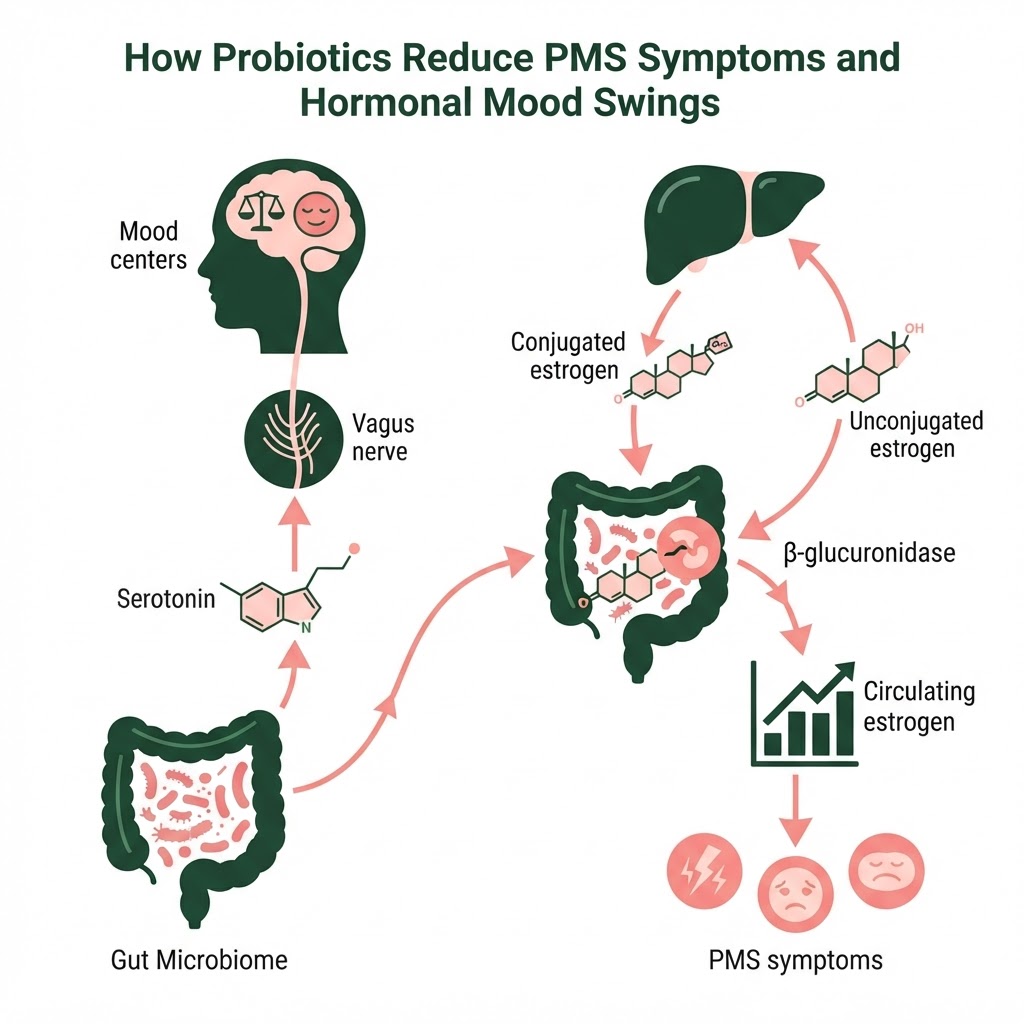
- Your liver conjugates (deactivates) estrogen, attaching a glucuronic acid molecule so it can be safely excreted via bile into the intestines.
- Certain gut bacteria produce an enzyme called β-glucuronidase, which cleaves that glucuronic acid tag and reactivates the estrogen, allowing it to be reabsorbed into circulation.
- If your gut microbiome is dysbiotic (imbalanced) — with an overabundance of β-glucuronidase-producing bacteria — too much estrogen gets recirculated, leading to estrogen excess or erratic estrogen signalling.
- Conversely, a depleted microbiome may produce too little β-glucuronidase, leading to estrogen insufficiency and its associated symptoms.
Key finding: A 2019 study in the Journal of Clinical Endocrinology & Metabolism demonstrated that women with a less diverse gut microbiome showed significantly altered estrogen metabolite profiles, linking microbiome composition directly to hormonal regulation. Read more at the NIH National Library of Medicine
This means that the health and diversity of your gut microbiome directly influences how much estrogen is circulating in your body at any given point in your cycle — including during the luteal phase, when estrogen fluctuations are most clinically significant for PMS.
When we restore a healthy, diverse microbiome with the right probiotic strains, we can meaningfully influence this estrogen regulation pathway. This is not theoretical. This is biochemistry.
3. The Gut-Brain Axis: How Your Microbiome Controls Your Mood
If the estrobolome explains the hormonal connection, the gut-brain axis explains the emotional one — and they are deeply intertwined.
The gut-brain axis is a bidirectional communication network linking the enteric nervous system (the 500 million neurons lining your gut — sometimes called the "second brain") with your central nervous system, via the vagus nerve, immune signalling, and the bloodstream. What happens in your gut does not stay in your gut.
Serotonin: The Mood Molecule Made in Your Gut
This may surprise you: approximately 90–95% of the body's serotonin is produced in the gut, not the brain. Gut bacteria — particularly species from the Lactobacillus and Bifidobacterium genera — play a direct role in stimulating intestinal enterochromaffin cells to produce serotonin.
When gut bacteria are diverse and thriving:
- Serotonin production is supported
- The vagus nerve carries positive signals to the brain
- Inflammation is kept in check (inflammation is a known driver of low mood)
When the microbiome is disrupted:
- Serotonin synthesis is compromised
- Systemic low-grade inflammation increases
- The stress response (HPA axis) becomes dysregulated
- Mood, anxiety, and emotional resilience all suffer
GABA and the Anxiety Connection
Remember allopregnanolone — the progesterone metabolite that causes GABA receptor sensitivity issues in PMS? Here is the gut connection: certain Lactobacillus species, particularly L. rhamnosus, have been shown in preclinical research to directly modulate GABA receptor expression in the brain via the vagus nerve.
Research highlight: A landmark study published in PNAS found that Lactobacillus rhamnosus JB-1 produced significant changes in GABA receptor distribution in the mouse brain and reduced anxiety and depression-related behaviour. Severing the vagus nerve abolished these effects, confirming the gut-brain axis as the mechanism. Access the full study here
This research suggests that strategically chosen probiotic strains are not merely digestive aids — they are, in the most literal sense, neurological modulators.
4. The Research on Probiotics and PMS Symptoms
Theory is compelling, but what does the clinical evidence actually show? Let us examine what the research tells us specifically about probiotics and PMS relief.
Evidence for Mood and Emotional Symptoms
Several randomised controlled trials have now investigated the relationship between probiotic supplementation and psychological wellbeing in women:
- A 2017 randomised trial found that women taking a multi-strain Lactobacillus and Bifidobacterium combination supplement reported significantly lower scores on depression and anxiety assessments compared to placebo groups after eight weeks.
- Research specifically examining women with PMS found that probiotic supplementation was associated with reductions in irritability, tearfulness, and mood swings during the luteal phase, with effects measurable from the second menstrual cycle onward.
- Studies on psychobiotics (probiotics with documented psychological effects) consistently show that strains including L. acidophilus, L. rhamnosus, B. longum, and B. lactis are most strongly associated with mood-related benefits.
Evidence for Physical PMS Symptoms
The gut-PMS connection extends beyond mood:
Bloating and digestive disturbance: Gut microbiome disruption increases intestinal permeability and gas production. Probiotic restoration consistently reduces bloating — one of the most commonly reported PMS complaints. Strains such as L. plantarum and B. infantis show particular efficacy here.
Inflammation and pain: PMS is associated with elevated prostaglandins and systemic low-grade inflammation. Diverse gut bacteria produce short-chain fatty acids (SCFAs) — particularly butyrate — that have potent anti-inflammatory effects and may reduce cramp severity and generalised pain sensitivity.
Food cravings and blood sugar: The microbiome influences insulin sensitivity and appetite-regulating hormones including leptin and ghrelin. A healthier microbiome is associated with more stable blood sugar, which directly impacts the carbohydrate cravings that intensify during the luteal phase.
Headaches: Emerging evidence suggests gut dysbiosis contributes to migraine frequency through inflammatory and serotonergic pathways — offering another potential mechanism by which probiotics may reduce PMS-related headaches.
Why Most Probiotic Supplements Fall Short
Here is an uncomfortable truth I feel obligated to share: the majority of probiotic supplements on the market deliver far fewer viable bacteria to your gut than their labels claim. Standard capsules and tablets are vulnerable to stomach acid, heat, and moisture. Studies have shown that many commercially available probiotics lose 60–90% of their viable bacteria before they ever reach the colon.
This is precisely why we developed our SCO2 (supercritical carbon dioxide) microencapsulation technology at Her-Biotics. By encapsulating each probiotic strain in a protective matrix created using supercritical CO₂ — a process that preserves bacterial integrity without heat or chemical solvents — we deliver 1000× more viable probiotics to the gut compared to standard supplements. The bacteria that reach your colon are alive, active, and ready to colonise. This distinction is not marketing language. It is the difference between a supplement that actually works and one that does not.
You can learn more about the technology behind our formulas on our Science Page.
5. Key Probiotic Strains for Hormonal and Mood Balance
Not all probiotics are equal, and when it comes to PMS specifically, strain selection matters enormously. Here are the strains with the strongest evidence base for hormonal and mood support:
Top Evidence-Backed Strains
| Strain | Key Benefit | |---|---| | Lactobacillus acidophilus | Estrobolome regulation; estrogen metabolism support | | Lactobacillus rhamnosus | GABA modulation; anxiety reduction | | Lactobacillus reuteri | Progesterone support; anti-inflammatory | | Bifidobacterium longum | Stress response regulation; cortisol modulation | | Bifidobacterium lactis | Immune balance; systemic inflammation reduction | | Lactobacillus plantarum | Bloating relief; gut barrier integrity | | Lactobacillus gasseri | Menstrual pain reduction; weight-related hormone balance |
Our Her-Biotics Original formula contains a 16-strain blend covering all of these key strains, delivered via our SCO2 encapsulation technology for maximum viability.
6. The Her-Biotics PMS Support Formula: Targeted Relief by Design
Understanding all of the above is what led me to formulate Her-Biotics PMS Support — a product built specifically around the biology of the premenstrual phase.
The formula combines our 16-strain, SCO2-encapsulated probiotic core with a carefully chosen ensemble of evidence-based complementary ingredients:
The Synergistic Ingredient Stack
Chasteberry (Vitex agnus-castus) One of the most extensively studied herbal interventions for PMS, chasteberry works by binding to dopamine D2 receptors in the pituitary gland, thereby reducing prolactin secretion. Elevated prolactin in the luteal phase is associated with breast tenderness, mood disruption, and cycle irregularity. Multiple meta-analyses confirm chasteberry's efficacy for PMS symptom reduction.
Evening Primrose Oil Rich in gamma-linolenic acid (GLA), Evening Primrose Oil helps modulate prostaglandin synthesis — reducing inflammation and the breast tenderness and cramping driven by pro-inflammatory prostaglandins during the late luteal phase.
Magnesium Glycinate Magnesium deficiency is strongly correlated with PMS severity. Magnesium glycinate — the most bioavailable form — supports GABA receptor function (directly relevant to the anxiety and mood volatility of PMS), reduces prostaglandin-driven cramps, and improves sleep quality. Glycinate's chelated form also minimises the digestive discomfort associated with other magnesium forms.
Vitamin B6 (Pyridoxine) Vitamin B6 is a cofactor in the synthesis of both serotonin and dopamine. Clinical studies have found B6 supplementation at appropriate doses reduces PMS-related depression, irritability, and fatigue. It also supports the healthy metabolism of estrogen in the liver — creating a complementary effect with our probiotic estrobolome support.
Together with the probiotic core, these ingredients address PMS from every relevant biological angle: the microbiome, the estrobolome, neurotransmitter synthesis, inflammation, and hormonal signalling.
For a full breakdown of every ingredient and the studies supporting them, visit our Science Page or explore the complete Her-Biotics PMS Support product page.
7. Practical Steps: Building Your PMS-Reduction Protocol
Science is only valuable if it is actionable. Here is how to use everything we have covered:
A Month-by-Month Approach
Month 1: Establish your baseline
- Start Her-Biotics PMS Support from Day 1 of your cycle
- Track your symptoms using a simple daily diary (rate mood, bloating, pain, fatigue on a 1–10 scale)
- Probiotic colonisation takes time — most women notice initial digestive improvements within 2–3 weeks
Month 2: Reinforce with lifestyle
- Diet: Increase fermented foods (kefir, kimchi, sauerkraut) to support microbiome diversity alongside supplementation
- Reduce: Ultra-processed foods and refined sugar, which feed dysbiotic bacteria and worsen inflammation
- Fibre: Aim for 30g daily — prebiotics feed your probiotic bacteria and dramatically increase their efficacy
- Sleep: Prioritise sleep in the luteal phase; sleep deprivation worsens both mood and cortisol dysregulation
Month 3: Assess and optimise
- Compare your symptom diary to Month 1
- Most women report meaningful improvement by cycles 2–3, with continued improvement through cycle 6
- Consider combining with Her-Biotics Original if digestive and immune support are also priorities
When to Seek Additional Support
Probiotics and nutrition are powerful tools, but PMDD and severe PMS may require additional medical intervention. Please do not hesitate to speak with your healthcare provider if your symptoms are significantly impacting your quality of life. What we offer at Her-Biotics is a rigorously formulated foundation — not a replacement for personalised medical care.
For more women's health resources, guides, and evidence-based articles, explore our Radiance Hub — our dedicated content space for women who want to understand their bodies more deeply.
The Bottom Line
PMS is not something you simply have to endure. The science is unambiguous: your gut microbiome is intimately involved in estrogen regulation through the estrobolome, in mood chemistry through the gut-brain axis, and in the inflammatory processes that drive physical PMS symptoms. Restoring and supporting your microbiome with the right probiotic strains — delivered in a form that actually reaches your gut alive — is one of the most evidence-aligned interventions available to menstruating women today.
This is why I built Her-Biotics. Not as another supplement, but as a precision tool grounded in real biology.
Ready to Transform Your Cycle?
If you're tired of dreading the second half of your month, I invite you to try Her-Biotics PMS Support — formulated by a physician, built on real science, and designed specifically for the hormonal and neurological realities of PMS. With our patented SCO2 microencapsulation technology delivering 1000× more viable probiotics to your gut, and a synergistic stack of chasteberry, magnesium glycinate, evening primrose oil, and vitamin B6, this is not a generic probiotic with PMS on the label. It is a targeted, comprehensive approach to taking your cycle back. Browse all our formulas at Shop All Formulas and find the formula designed for where you are in your life right now. Your gut — and your future self — will thank you.
Dr. Chomba Chuma, MD, is the founder of Her-Biotics and a specialist in integrative women's health and microbiome medicine. All content is intended for informational purposes and does not constitute personalised medical advice. Please consult your healthcare provider before beginning any new supplement regimen.
Enjoyed this? Get the next one first.
Science made simple, delivered to your inbox. No spam, unsubscribe anytime.