
By Dr. Chomba Chuma, MD & Founder, Her-Biotics | Published June 29, 2026
For millions of women, the ten to fourteen days before their period arrive like an unwelcome houseguest — bringing bloating, brain fog, tearfulness, rage, cramps, and a general sense that your body is working against you. Premenstrual syndrome (PMS) affects an estimated 75% of menstruating women to some degree, and for roughly 5–8%, it escalates into the more debilitating premenstrual dysphoric disorder (PMDD).
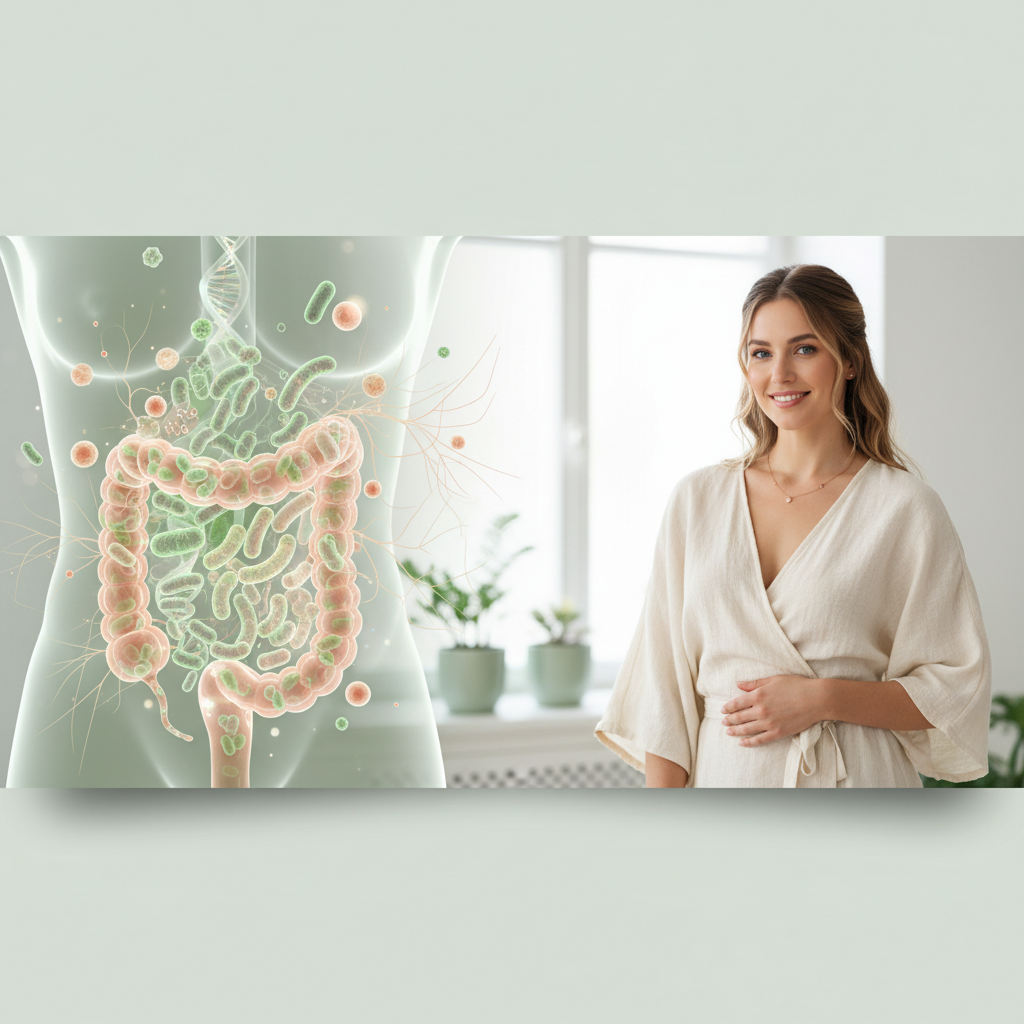
For decades, we've framed PMS as purely a hormonal problem — a predictable crash in estrogen and progesterone that the body simply has to weather. But the science has moved on dramatically. What we now know is that your gut microbiome is a central player in how your hormones behave, how your brain processes emotion, and how severely you experience PMS symptoms.
This is both exciting and empowering, because unlike your menstrual cycle itself, your gut microbiome is something you can actively influence — including with the right probiotic supplement. Let me walk you through the science.
1. The Hormonal Rollercoaster of PMS: What's Actually Happening
To understand how probiotics help, we first need to understand what drives PMS in the first place.
Your menstrual cycle is orchestrated by a cascade of hormones — primarily estrogen and progesterone — that rise and fall in a carefully choreographed rhythm. During the luteal phase (roughly days 15–28 of a 28-day cycle), progesterone rises and then, if no fertilisation occurs, both estrogen and progesterone drop sharply. It is this rapid hormonal withdrawal that triggers most PMS symptoms.
Why Some Women Suffer More Than Others
Here's the question that's puzzled clinicians for years: if every menstruating woman experiences this same hormonal drop, why do some women barely notice it while others are floored?
The answer is increasingly clear: it's not just about how much estrogen you produce — it's about how efficiently your body metabolises and eliminates it. This is where the gut enters the conversation.
When estrogen is processed by the liver, it's packaged for excretion via bile and sent to the intestine. In a healthy gut, this spent estrogen is eliminated in your stool. But in a gut with dysbiosis (microbial imbalance), things go wrong. Certain bacteria produce an enzyme called beta-glucuronidase, which deconjugates estrogen — essentially unwrapping it from its packaging and allowing it to be reabsorbed back into the bloodstream.
The result? Estrogen dominance — too much circulating estrogen relative to progesterone. This imbalance is directly linked to more severe PMS, heavier periods, breast tenderness, bloating, anxiety, and mood instability.
2. The Estrobolome: Your Gut's Hormonal Control Centre
This brings us to one of the most important concepts in modern women's health: the estrobolome.
"The estrobolome is the aggregate of enteric bacterial genes whose products are capable of metabolising estrogens. Alterations in the composition of the gut microbiota affect estrobolome activity, which in turn influences circulating and excreted estrogen levels." — Kwa et al., Journal of the National Cancer Institute, 2016 (https://academic.oup.com/jnci/article/108/8/djw029/2514617)
Your estrobolome is essentially a specialised community of gut bacteria that governs estrogen metabolism. When this community is diverse and balanced, estrogen is processed and excreted efficiently. When it's disrupted — by antibiotics, a high-sugar diet, chronic stress, or hormonal contraceptives — beta-glucuronidase activity rises, estrogen is recirculated, and hormonal chaos ensues.
Key Estrobolome Findings You Should Know
- Higher microbial diversity is associated with healthier estrogen metabolism and lower PMS severity
- Lactobacillus and Bifidobacterium species are among the most important regulators of estrobolome activity
- Women with PMDD have been shown to have measurably different gut microbiome compositions compared to women without it
- Estrogen itself influences the gut microbiome — creating a bidirectional feedback loop between your hormones and your gut bugs
This feedback loop means that when you support your gut, you support your hormones — and when your hormones are better balanced, your gut functions more optimally. It's a virtuous cycle that probiotic supplementation can help initiate.
You can learn more about how our formulas are designed around this science on our Science Page.
3. The Gut-Brain Axis: Why Your Gut Affects Your Mood
Bloating and cramps are uncomfortable enough. But for many women, it's the psychological symptoms of PMS — the anxiety, irritability, low mood, and emotional volatility — that feel most destabilising. Here again, the gut is a key actor.
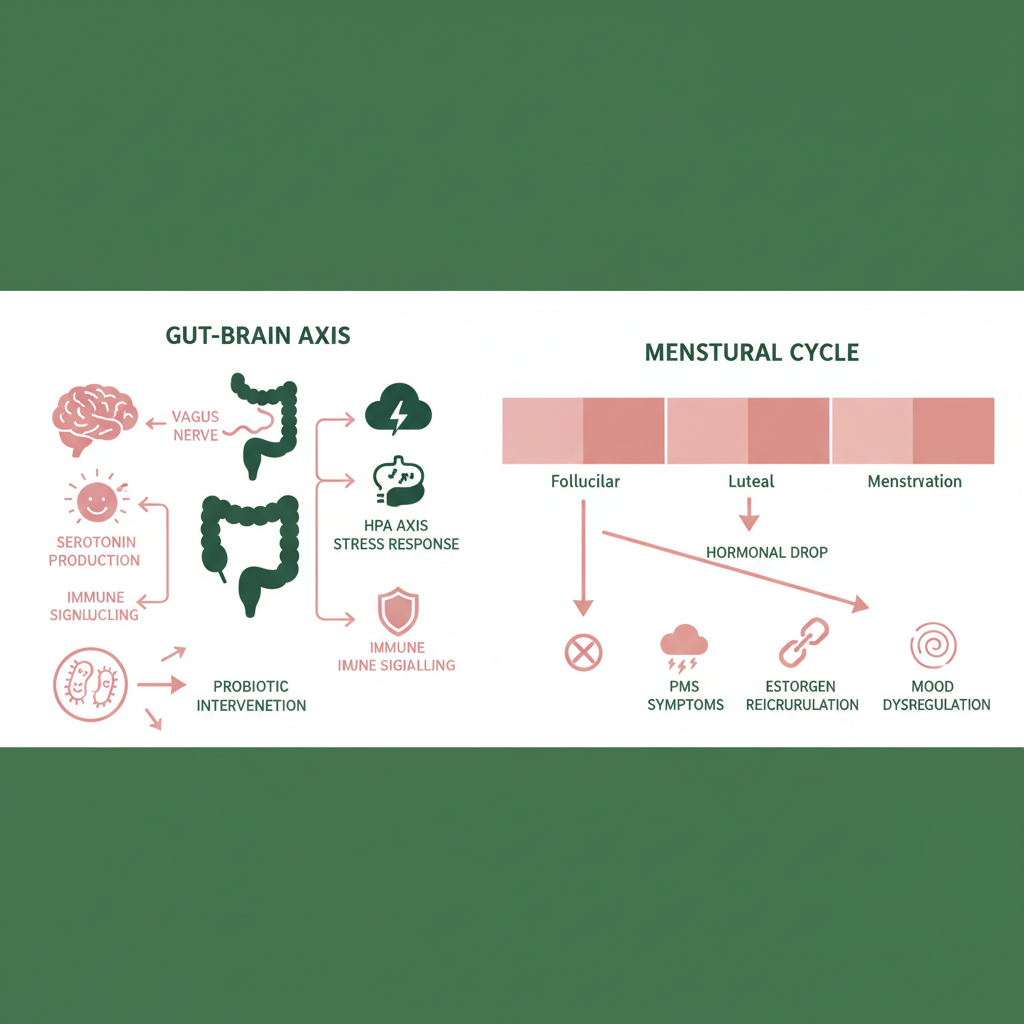
The gut-brain axis is the bidirectional communication network connecting your gastrointestinal tract and your central nervous system. It operates via:
- The vagus nerve — a physical highway running from your brainstem to your gut
- The enteric nervous system — your gut's own neural network, sometimes called the "second brain"
- Neurotransmitter production — your gut produces approximately 90–95% of your body's serotonin, as well as significant amounts of GABA, dopamine precursors, and other neurochemicals
- The HPA axis — the hypothalamic-pituitary-adrenal stress response system, which is heavily influenced by gut microbial signals
- Immune signalling — your gut houses ~70% of your immune system, and inflammatory signals from a dysbiotic gut travel to the brain
Serotonin, Mood, and Your Microbiome
Serotonin is your primary "feel-good" neurotransmitter, and its levels drop significantly in the luteal phase of your cycle — contributing directly to PMS mood symptoms. What most people don't know is that gut bacteria directly influence serotonin synthesis in the intestinal lining.
Specific Lactobacillus and Bifidobacterium strains stimulate enterochromaffin cells in the gut wall to produce more serotonin. Research published in Cell demonstrated that germ-free mice had significantly lower gut serotonin levels, and that colonisation with specific bacterial strains restored normal serotonin production. (https://www.cell.com/fulltext/S1931-3128(15)00389-6)
For women navigating PMS, this matters enormously. Supporting a diverse gut microbiome with targeted probiotics can help sustain serotonin production during the luteal phase — potentially softening the emotional crash that many women dread.
4. What the Research Says: Probiotics and PMS
The clinical evidence connecting probiotics to PMS relief is still growing, but what we have is genuinely compelling.
Probiotics and Inflammation
One underappreciated driver of PMS severity is systemic inflammation. Women with more severe PMS and PMDD show elevated inflammatory markers, including CRP and certain interleukins. A dysbiotic gut — with its compromised intestinal barrier and bacterial toxin "leakage" (endotoxemia) — is a significant source of this inflammation.
Multiple randomised controlled trials have demonstrated that Lactobacillus and Bifidobacterium supplementation reduces inflammatory markers in women, with downstream benefits for mood, energy, and pain perception. Reducing gut-derived inflammation during the luteal phase is one of the most credible mechanisms by which probiotics can ease PMS.
Probiotics and Anxiety/Depression Symptoms
A 2019 meta-analysis in General Psychiatry found that probiotic supplementation produced significant reductions in depression and anxiety scores across multiple trials, with women showing particularly strong responses. The proposed mechanisms align precisely with what we've discussed: serotonin modulation, HPA axis regulation, and reduced neuroinflammation.
Probiotics and Bloating/Digestive PMS Symptoms
GI symptoms — bloating, constipation, diarrhoea, nausea — are among the most common PMS complaints, and they're almost entirely mediated by the gut. Probiotics have the most robust evidence base in this domain, with consistent findings across trials showing significant reductions in bloating, abdominal pain, and bowel irregularity among women using targeted probiotic strains.
Magnesium, B6, and Hormonal Synergy
It's worth noting that probiotics work best as part of a broader nutritional strategy. Magnesium glycinate, for example, has been shown in multiple trials to reduce PMS-related bloating, mood symptoms, and breast tenderness. Vitamin B6 supports progesterone synthesis and serotonin production. Chasteberry (Vitex agnus-castus) has a growing evidence base for reducing PMS symptom scores by acting on dopamine receptors and modulating luteinising hormone.
This is precisely why Her-Biotics PMS Support was formulated to combine our patented SCO2 probiotic complex with clinically relevant doses of these evidence-based co-factors — because the science supports a synergistic approach, not a single-ingredient solution.
5. Why Standard Probiotics Often Fail — and What Makes SCO2 Technology Different
You might be thinking: I've tried probiotics before and didn't notice much difference. If so, you're not alone — and there's a very specific reason why.
Most probiotic supplements are dead on arrival. The live bacterial strains in standard capsules are extraordinarily vulnerable. Stomach acid, bile salts, oxygen exposure during manufacturing, heat during storage — each of these is capable of destroying a significant proportion of the live cultures before they ever reach your colon, where they're actually needed.
Industry research suggests that by the time a standard probiotic capsule reaches the large intestine, as few as 1% of the original bacterial count may still be viable.
The SCO2 Microencapsulation Difference
At Her-Biotics, we use patented SCO2 (supercritical carbon dioxide) microencapsulation technology to solve this problem. Here's what that means in practice:
- Each probiotic strain is individually encapsulated in a protective matrix using supercritical CO2 — a process that works at low temperatures, preserving bacterial viability and avoiding the heat damage common in spray-drying methods
- The encapsulation creates a gastric acid-resistant shell that remains intact through the stomach and proximal small intestine, dissolving only in the colon where the bacteria are needed
- The result is 1000× more viable probiotics delivered to the gut compared to standard unencapsulated supplements — a difference that translates directly into clinical efficacy
- No oxygen exposure during processing means shelf stability is dramatically improved — our products maintain full potency without refrigeration
This isn't a marketing claim — it's measurable, validated technology. You can explore the full science behind our delivery system on our Science Page.
For women managing PMS, this delivery precision matters. You need those probiotic strains to actually reach your colon alive to influence your estrobolome, your serotonin production, and your inflammatory signalling. With standard supplements, you're largely spending money on capsules of inert powder. With SCO2 encapsulation, you're getting what's on the label — delivered where it counts.
6. Building Your PMS-Support Protocol: A Practical Guide
Understanding the science is one thing — putting it into practice is another. Here's how I recommend approaching probiotic supplementation for PMS, based on both the evidence and what I've seen work clinically.
Start With Consistency
Probiotics work cumulatively. The microbiome doesn't transform overnight — it shifts gradually as you introduce and consistently feed beneficial bacterial communities. Commit to at least 8–12 weeks before assessing your full response, and aim to take your supplement at the same time each day (I recommend with breakfast).
Layer in Dietary Support
Your probiotic strains need to be fed. Prebiotic fibres — found in garlic, leeks, onions, asparagus, green bananas, and oats — selectively nourish beneficial bacteria and amplify the effects of supplementation. Reducing processed sugar and ultra-processed foods decreases the food supply for dysbiotic bacteria and reduces inflammatory load.
Track Your Symptoms
Use a period tracking app to log both your cycle and your symptom severity across the months you're supplementing. Many women begin to notice improvements in bloating and digestive PMS symptoms first (often within 4–6 weeks), followed by gradual improvements in mood and energy as estrobolome function normalises.
Consider the Full Spectrum
If PMS is your primary concern, explore our full Radiance Hub for additional evidence-based guidance on cycle syncing, anti-inflammatory nutrition, and stress management — all of which complement probiotic therapy. And if you're unsure which formula is right for your needs, our Shop All Formulas page has a formula finder to guide you.
7. Who Should Consider Her-Biotics PMS Support Specifically?
Her-Biotics PMS Support is designed for women who experience moderate to severe PMS symptoms — particularly those involving:
- Mood symptoms: irritability, anxiety, tearfulness, low mood in the luteal phase
- Physical symptoms: bloating, breast tenderness, cramps, fatigue, headaches
- Sleep disruption in the week before menstruation
- Food cravings and energy crashes associated with hormonal fluctuation
It's also an excellent choice for women who have:
- Previously used hormonal contraceptives (which significantly deplete gut diversity)
- A history of antibiotic use in the past 1–2 years
- High stress levels (which directly compromise microbiome composition via cortisol-mediated effects)
- A diet low in fibre and fermented foods
If you're over 40 and beginning to notice that your PMS is changing in character — often a sign of perimenopause — you may also benefit from exploring Her-Biotics Original alongside PMS Support, or transitioning to our Menopause Support formula as your hormonal picture evolves.
The Bottom Line: Your Gut Is Your Hormonal Ally
PMS is real, it can be genuinely debilitating, and you deserve solutions that are grounded in biology rather than dismissal. The emerging science of the estrobolome, the gut-brain axis, and probiotic-hormone interaction gives us a credible, actionable framework for reducing PMS severity — not by masking symptoms, but by addressing root causes.
When your gut microbiome is diverse and balanced:
- ✅ Estrogen is metabolised and eliminated efficiently, reducing estrogen dominance
- ✅ Serotonin production is better supported, softening mood swings
- ✅ Gut-derived inflammation is lower, reducing pain and fatigue
- ✅ The HPA stress axis is better regulated, decreasing anxiety and overwhelm
- ✅ GI symptoms like bloating are significantly reduced
This is exactly what a well-formulated, high-delivery probiotic — combined with targeted co-factors — can help you achieve.
Ready to Take Control of Your Cycle?
If you're tired of dreading the week before your period, I designed Her-Biotics PMS Support for you. It combines our clinically validated 16-strain SCO2-encapsulated probiotic complex with Chasteberry, Evening Primrose Oil, Magnesium Glycinate, and Vitamin B6 — each selected for their specific, evidence-based roles in hormonal and mood regulation. This isn't a generic women's supplement with token probiotic dusting. It's a precision formula built around the science of the estrobolome and gut-brain health, delivered with technology that ensures every single colony-forming unit actually reaches your gut alive. Your cycle shouldn't define your quality of life. Start giving your gut — and your hormones — the support they deserve.
Explore Her-Biotics PMS Support →
Dr. Chomba Chuma is a medical doctor and the founder of Her-Biotics. All content is for informational purposes and does not constitute personalised medical advice. Please consult your healthcare provider before beginning any new supplement regimen, particularly if you are pregnant, breastfeeding, or managing a diagnosed health condition.
Enjoyed this? Get the next one first.
Science made simple, delivered to your inbox. No spam, unsubscribe anytime.