

By Dr. Chomba Chuma, MD & Founder, Her-Biotics | August 19, 2026
When we talk about optimising performance for the female athlete, the conversation almost always gravitates toward training loads, macronutrient timing, or sleep quality. Rarely does it start where it arguably should — in the gut.
Your gastrointestinal tract is home to approximately 38 trillion microorganisms, collectively known as the gut microbiome. These microbes are not passive passengers. They synthesise vitamins, regulate hormones, modulate inflammation, govern immune responses, and — critically for athletes — determine how efficiently your body extracts and utilises the nutrients that fuel your performance.
As a physician and someone who has worked closely with active women across multiple disciplines, I've seen firsthand how gut health can be the difference between a plateau and a breakthrough. This article dives deep into the relationship between the microbiome, sports performance, recovery, and iron absorption — with a particular focus on what makes the female athlete's gut uniquely complex, and how you can use that knowledge to compete at your absolute best.
1. Why the Female Athlete's Gut Is a Different Beast
Let's be clear: women are not simply smaller men, and female athletes face a distinct set of physiological and hormonal realities that profoundly affect gut function.
The Hormonal-Gut Axis
Oestrogen and progesterone receptors are distributed throughout the gastrointestinal tract. As these hormones fluctuate across the menstrual cycle, they directly alter gut motility, intestinal permeability, and even the composition of the microbiome itself. Research published in Cell Host & Microbe has demonstrated that oestrogen metabolites are partially regulated by a subset of gut bacteria — collectively termed the estrobolome — which produce the enzyme beta-glucuronidase to reactivate oestrogen for recirculation.
This means your microbiome composition can influence your oestrogen levels, which in turn influence your training adaptations, bone density, mood, and recovery capacity.
"The gut microbiome is now recognised as a critical endocrine organ, capable of modulating circulating sex hormone concentrations in ways that are particularly relevant to female physiology." — Journal of Clinical Endocrinology & Metabolism, 2024
The Female Athlete Triad and Gut Implications
The Female Athlete Triad — the interplay between low energy availability, menstrual dysfunction, and low bone density — has a gut health dimension that is frequently overlooked. Chronic low caloric intake, as seen in Relative Energy Deficiency in Sport (RED-S), dramatically reduces microbiome diversity. A less diverse microbiome means impaired nutrient absorption, increased intestinal permeability ("leaky gut"), elevated systemic inflammation, and compromised immune function — all of which accelerate the downward spiral of RED-S.
Understanding this link is the first step toward breaking it.
2. The Gut–Performance Connection: What the Science Actually Says
For years, the link between gut health and sports performance was considered speculative. That is no longer the case. A growing and compelling body of evidence now positions the gut microbiome as a central regulator of athletic capacity.
Energy Metabolism and Short-Chain Fatty Acids
Beneficial gut bacteria — particularly species from the genera Lactobacillus, Bifidobacterium, and Faecalibacterium — ferment dietary fibre to produce short-chain fatty acids (SCFAs), including butyrate, propionate, and acetate. SCFAs serve as:
- A direct fuel source for colonocytes (intestinal lining cells), maintaining gut barrier integrity
- Metabolic modulators that improve insulin sensitivity and glucose utilisation during exercise
- Anti-inflammatory agents that suppress exercise-induced systemic inflammation
- Signalling molecules that influence mitochondrial biogenesis in muscle tissue
A landmark 2019 study in Nature Medicine identified that elite marathon runners harboured significantly higher levels of Veillonella atypica, a bacterium that converts lactate — the very compound associated with muscle fatigue — into propionate, a SCFA that can be used as an energy substrate. This represents a genuinely fascinating example of the microbiome directly altering the biochemistry of athletic performance.
Learn more about the science behind our formulas on our Science Page
Gut Integrity Under Training Stress
High-intensity and endurance training redirects blood flow away from the gut toward working muscles. This phenomenon, known as exercise-induced splanchnic hypoperfusion, temporarily compromises intestinal barrier function. The result is increased gut permeability, allowing bacterial endotoxins (lipopolysaccharides, or LPS) to enter the bloodstream — a condition sometimes called "leaky gut" or more clinically, exercise-induced gastrointestinal syndrome.
The consequences include:
- Elevated systemic inflammation markers (IL-6, TNF-α, CRP)
- Nausea, cramping, and GI distress during competition
- Impaired muscle protein synthesis post-exercise
- Prolonged recovery times
Athletes with a robust, diverse microbiome — particularly those with higher concentrations of butyrate-producing bacteria — show significantly greater gut barrier resilience under exercise stress. This is one of the most compelling arguments for proactive probiotic supplementation in active women.
According to research published on PubMed, probiotic supplementation with multi-strain formulations significantly reduced markers of intestinal permeability and systemic inflammation in endurance athletes following high-intensity training bouts. View study on PubMed
3. Iron Absorption: The Female Athlete's Achilles Heel
Iron deficiency is the most common nutritional deficiency in female athletes worldwide. The consequences — fatigue, reduced VO2 max, impaired thermoregulation, brain fog, and mood disruption — can devastate performance long before anaemia is formally diagnosed.
Yet what most athletes and even many clinicians don't realise is this: the gut microbiome plays a fundamental role in determining how much iron you actually absorb from food and supplements.
How the Microbiome Regulates Iron
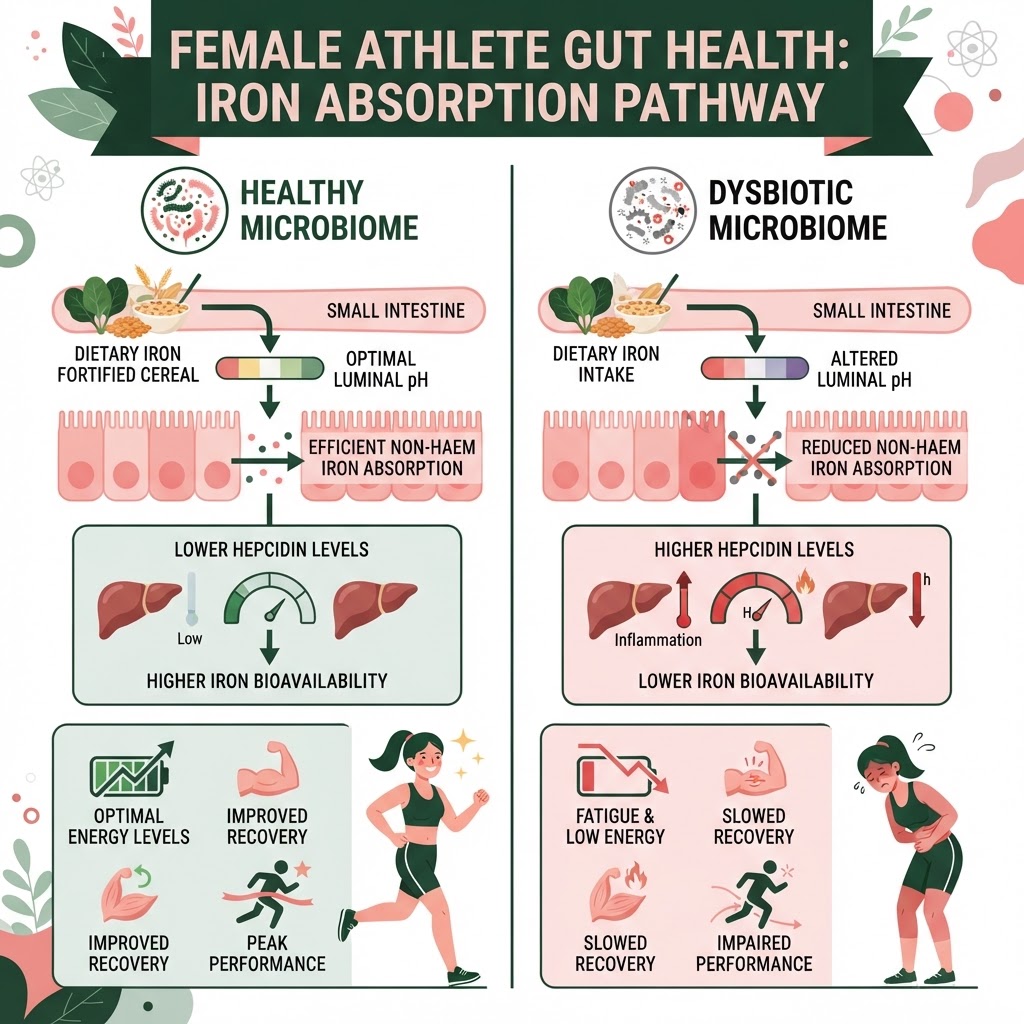
Iron absorption in the small intestine is regulated by multiple factors, but the microbiome influences this process through several mechanisms:
- Hepcidin modulation: Gut bacteria influence the liver's production of hepcidin, the master regulator of iron homeostasis. Dysbiosis and increased LPS translocation elevate hepcidin, which blocks iron absorption and traps iron in storage cells — a state called functional iron deficiency.
- Luminal pH and redox environment: Lactobacillus species produce lactic acid, lowering luminal pH, which increases the solubility and bioavailability of non-haem iron (the form found in plant foods and most supplements).
- Competitive iron sequestration: Pathogenic bacteria like E. coli and Staphylococcus compete aggressively for luminal iron. A healthy microbiome dominated by beneficial species limits this competition.
- Vitamin B12 and folate synthesis: Certain gut bacteria synthesise B12 and folate, cofactors essential for healthy red blood cell production and thus for the resolution of iron-deficiency anaemia.
For the female athlete who is already dealing with menstrual blood losses and potentially elevated iron demands from training, the integrity of the gut microbiome is not a peripheral concern — it is absolutely central to iron status management.
Practical Implications for Iron-Deficient Athletes
If you've been prescribed iron supplementation and seen limited improvement, or if you experience persistent fatigue despite adequate dietary intake, gut dysbiosis may well be the missing piece. Restoring microbial balance before or alongside iron supplementation can meaningfully improve absorption outcomes.
Research from the NIH National Institute of Diabetes and Digestive and Kidney Diseases highlights that gut inflammation and altered microbiome composition are major contributors to impaired iron bioavailability in individuals with subclinical dysbiosis. Read the NIH overview
4. Recovery, Inflammation, and the Microbiome
Recovery is where performance is built. Strength gains, speed adaptations, and endurance improvements do not happen during training — they happen in the hours and days after, when the body repairs and rebuilds. The gut microbiome sits squarely in the centre of this process.
Post-Exercise Inflammation: Friend, Then Foe
The acute inflammation triggered by intense exercise is essential — it signals the repair machinery and drives adaptation. But chronic, unresolved inflammation is the enemy of the female athlete. It impairs muscle protein synthesis, prolongs soreness, suppresses immune function, and contributes to overtraining syndrome.
A well-functioning gut microbiome acts as an inflammation thermostat:
- Butyrate and other SCFAs directly inhibit pro-inflammatory NF-κB signalling pathways
- Regulatory T-cell induction by specific bacterial species (e.g., Clostridiales family) dampens excessive immune activation post-exercise
- Serotonin precursor synthesis: Approximately 90% of the body's serotonin is produced in the gut. Serotonin influences pain perception, mood, and sleep quality — all critical dimensions of recovery
- Tryptophan metabolism: Gut bacteria regulate the conversion of dietary tryptophan to either serotonin or kynurenine; dysbiosis can shift this balance toward the kynurenine pathway, increasing central fatigue and reducing exercise motivation
Muscle Damage and Repair
Emergent research is revealing direct links between specific probiotic strains and muscle recovery markers. Multi-strain Lactobacillus and Bifidobacterium supplementation has been associated with:
- Reduced creatine kinase (CK) levels — a marker of muscle damage — 24–72 hours post-exercise
- Lower self-reported muscle soreness scores following eccentric loading protocols
- Faster restoration of muscular strength and power output between training sessions
For the female athlete managing a heavy training schedule, these are not marginal gains — they are the compounding advantages that determine who performs consistently over a season.
5. Gut Health Strategies for the Serious Female Athlete
Armed with the science, let's translate this into practical, evidence-informed strategies.
Dietary Foundations
No supplement can substitute for a microbiome-supportive diet. Prioritise:
- Dietary fibre diversity: Aim for 30+ different plant foods per week. Variety drives microbial diversity. Include legumes, wholegrains, vegetables, fruits, nuts, and seeds.
- Fermented foods: Yoghurt, kefir, sauerkraut, kimchi, and miso provide live cultures that can transiently enrich the microbiome and reduce inflammatory markers, as demonstrated in a 2021 Stanford study published in Cell.
- Polyphenol-rich foods: Berries, dark chocolate, green tea, and olive oil act as prebiotic substrates that selectively feed beneficial bacteria.
- Adequate protein: Sufficient protein intake is essential not only for muscle repair but for maintaining the mucosal lining of the gut. Aim for 1.6–2.2g per kg of bodyweight on training days.
- Hydration: Dehydration reduces gut blood flow and transit time, compounding exercise-induced permeability.
Managing Gut Stressors
Equally important is minimising factors that disrupt the microbiome:
- NSAIDs: Ibuprofen and similar drugs, often used for exercise-related pain, significantly increase intestinal permeability. Use sparingly and strategically.
- Antibiotic courses: When medically necessary, always follow with a multi-strain probiotic course of at least 8–12 weeks to restore diversity.
- Chronically low energy availability: Underfuelling is one of the most potent drivers of gut dysbiosis in female athletes. This cannot be overemphasised.
- Excessive high-intensity training without adequate recovery: Structure training blocks with intentional recovery phases, not only for muscles and the nervous system, but for gut integrity.
Strategic Probiotic Supplementation
This is where targeted supplementation becomes genuinely transformative — provided you choose a product built on real science with real delivery efficacy.
The fundamental challenge with most probiotic supplements is survivability. The vast majority of probiotic bacteria are killed by gastric acid before they ever reach the large intestine where they exert their benefits. Standard encapsulation technologies offer modest protection at best.
This is precisely why we developed SCO2 (supercritical carbon dioxide) microencapsulation technology at Her-Biotics — a patented process that creates a protective matrix around each probiotic cell, allowing it to survive the harsh gastric environment and arrive in the gut fully viable and metabolically active. Independent testing has confirmed that this technology delivers 1000× more viable probiotics to the gut compared to standard unencapsulated supplements.
For active women, the formulation you choose matters enormously. The right strains, at the right doses, delivered to the right location, with synergistic co-nutrients — that is the difference between a probiotic that works and one that simply passes through.
Explore the full range of Her-Biotics formulas
6. Her-Biotics Sport: Designed for the Female Athlete
Built specifically for active women, Her-Biotics Sport goes beyond a standard probiotic to address the complete performance and recovery picture.
The formula combines our 16-strain SCO2-encapsulated probiotic core with a precision-selected array of performance co-nutrients:
- L-Glutamine: The primary fuel for intestinal epithelial cells, directly supporting gut barrier integrity under exercise stress. L-Glutamine depletion is documented following prolonged endurance exercise and is directly implicated in exercise-induced gut permeability.
- L-Carnitine: Facilitates the transport of long-chain fatty acids into the mitochondria for oxidation — essential for endurance energy production and reducing exercise-induced muscle damage.
- CoQ10 (Coenzyme Q10): A critical cofactor in mitochondrial ATP synthesis. CoQ10 levels are depleted by intense training and are frequently suboptimal in female athletes. Supplementation has been associated with improved time to exhaustion and reduced oxidative stress markers.
- Ashwagandha (KSM-66®): An adaptogenic herb with an impressive evidence base for reducing cortisol, improving VO2 max, enhancing muscle recovery, and supporting thyroid function — all particularly relevant for female athletes operating under high training and life stress loads.
- Iron (bisglycinate form): Highly bioavailable, gentle on the gut, and strategically paired with the probiotic strains in our formula that are specifically selected to support optimal iron absorption — a combination that addresses the female athlete's iron challenge from multiple angles simultaneously.
This is not a collection of ingredients thrown together. Every component of Her-Biotics Sport has been selected because it addresses a specific, evidence-supported physiological need of the training female body, working synergistically with the probiotic core to deliver compounding benefits.
For a broader look at how we approach women's nutritional health across life stages, visit our Radiance Hub — our resource centre for evidence-based wellness content.
The Bottom Line
The gut microbiome is not a wellness buzzword. For the female athlete, it is a legitimate performance organ — one that governs energy metabolism, iron absorption, inflammatory resolution, hormonal balance, and psychological resilience. Neglecting it means leaving very real performance gains on the table.
The evidence is unambiguous: female athletes with a diverse, resilient microbiome absorb more iron, recover faster, experience less GI disruption during competition, manage inflammation more effectively, and maintain more consistent energy levels across the training cycle.
Taking care of your gut is not a soft, peripheral wellness practice. It is core training.
Ready to Train From the Inside Out?
If you're a woman who takes her training seriously, Her-Biotics Sport was built for you. With our patented SCO2 microencapsulation delivering 1000× more viable probiotics to your gut, combined with L-Glutamine for barrier integrity, iron bisglycinate for optimal absorption, Ashwagandha for stress resilience, and CoQ10 for mitochondrial performance — this is the probiotic your training programme has been missing. Don't let gut health be the weak link in an otherwise strong performance chain. Shop Her-Biotics Sport today and feel the difference that science-led gut support makes to your training, your recovery, and your results.
Shop Her-Biotics Sport Now | View All Formulas | Read the Science
Dr. Chomba Chuma, MD is the founder of Her-Biotics and a practicing physician specialising in women's health and integrative medicine. All content is for informational purposes and does not constitute individual medical advice. Consult your healthcare provider before beginning any new supplement regimen.
Enjoyed this? Get the next one first.
Science made simple, delivered to your inbox. No spam, unsubscribe anytime.