

By Dr. Chomba Chuma, MD & Founder of Her-Biotics | August 7, 2026
If you've ever pushed through a tough training block only to feel inexplicably fatigued, struggled to recover between sessions, or dealt with the dreaded mid-run GI distress, your gut microbiome may be at the centre of it all. As a physician and lifelong advocate for women's health, I've spent years watching talented female athletes underperform — not because they lacked dedication, but because they lacked a healthy, resilient gut.
The science is unambiguous: the gut microbiome — the vast ecosystem of bacteria, fungi, and other microorganisms inhabiting your digestive tract — is not merely a digestion assistant. For the female athlete, it is a master regulator of energy, immunity, hormones, and recovery. And the uniquely female microbiome responds differently to exercise, nutrition, and stress than its male counterpart.
Let's explore what the research actually tells us, and what you can do — starting today — to build a gut that performs as hard as you do.
1. Why the Female Athlete Gut Is Different
For decades, sports science was built almost exclusively on male subjects. We now know this has left a significant knowledge gap — particularly when it comes to gut health. The female gut microbiome is shaped by a complex interplay of oestrogen, progesterone, cortisol, and the menstrual cycle, creating a dynamic that changes not just month to month, but day to day.
The Oestrogen-Gut Axis
Oestrogen directly influences the composition of gut bacteria through what scientists call the oestrobolome — a collection of gut microbes responsible for metabolising and recirculating oestrogen. When the oestrobolome is balanced, oestrogen is properly regulated, supporting bone density, muscle repair, mood stability, and cardiovascular function — all critical for sports performance.
When gut diversity is low, the oestrobolome becomes dysregulated. This can contribute to:
- Hormonal imbalances that impair energy availability
- Reduced muscle protein synthesis
- Heightened systemic inflammation
- Poor mood and motivation (yes, your gut makes over 90% of your body's serotonin)
Exercise-Induced Gut Stress
High-intensity and endurance exercise creates significant physiological stress on the GI tract. During intense effort, blood is redirected away from the digestive system to working muscles, a process called exercise-induced splanchnic hypoperfusion. This can cause:
- Increased intestinal permeability ("leaky gut")
- Translocation of bacterial endotoxins like lipopolysaccharide (LPS) into the bloodstream
- Systemic inflammation and delayed recovery
- GI symptoms including bloating, cramping, and nausea
"Gastrointestinal symptoms affect up to 70% of endurance athletes during competition, and emerging evidence suggests that gut microbiome dysbiosis is a key contributing factor." — Frontiers in Nutrition, 2021
Female athletes may be particularly vulnerable during the luteal phase of the menstrual cycle, when progesterone slows GI motility and increases gut permeability risk.
2. The Microbiome and Sports Performance: What the Science Says
The relationship between gut bacteria and athletic output is one of the most exciting frontiers in sports medicine. Research from elite athlete cohorts has consistently shown that high-performing athletes harbour a fundamentally different gut microbiome compared to sedentary individuals.
Key Performance-Linked Bacterial Strains
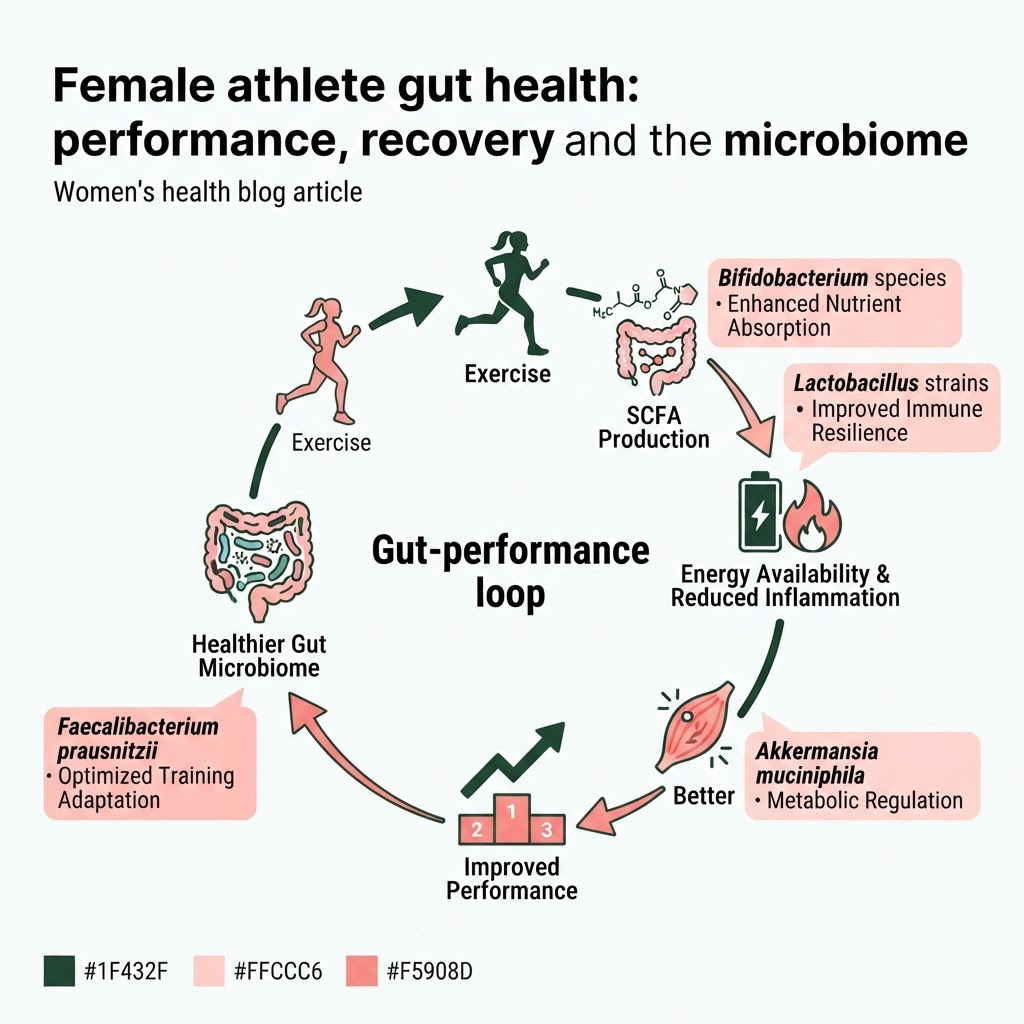
Lactobacillus and Bifidobacterium species remain the most studied in athletic populations. But newer research has identified several performance-relevant organisms:
- Veillonella atypica: Made headlines when researchers discovered that elite Boston Marathon runners had unusually high levels of this bacterium, which converts exercise-generated lactate into propionate — a short-chain fatty acid (SCFA) that can be used as fuel. Research from the Broad Institute demonstrated that mice supplemented with V. atypica showed a 13% improvement in run time compared to controls.
- Akkermansia muciniphila: Strongly associated with lean body mass, improved metabolic efficiency, and reduced intestinal permeability — all factors that directly influence sports performance.
- Lactobacillus plantarum: Shown in multiple trials to reduce exercise-induced muscle damage markers (CK and LDH), accelerate recovery, and improve VO₂ max in trained athletes.
Short-Chain Fatty Acids: Your Gut's Performance Currency
When beneficial gut bacteria ferment dietary fibre, they produce short-chain fatty acids (SCFAs) — primarily butyrate, propionate, and acetate. These molecules are far more than metabolic byproducts:
- Butyrate fuels colonocytes (gut lining cells), maintaining barrier integrity and reducing inflammation
- Propionate provides an alternative energy substrate and supports gluconeogenesis during prolonged exercise
- Acetate modulates immune function and supports fat oxidation
A depleted microbiome produces fewer SCFAs, meaning less fuel efficiency, more inflammation, and slower recovery — a triple threat to athletic performance.
3. Iron Absorption: The Female Athlete's Hidden Battle
Iron deficiency is the most common nutritional deficiency in female athletes worldwide, and it is devastatingly common. Studies suggest that up to 50% of female endurance athletes have suboptimal iron status, with many experiencing iron-deficiency anaemia.
The consequences are profound: reduced haemoglobin, impaired oxygen delivery to muscles, plummeting VO₂ max, crushing fatigue, and compromised immunity. What is less commonly discussed is the critical role the gut microbiome plays in iron absorption.
How Gut Bacteria Regulate Iron Uptake
Iron absorption occurs primarily in the duodenum and is tightly regulated by a hormone called hepcidin. Chronic inflammation — much of which originates in a dysbiotic gut — elevates hepcidin levels, directly blocking iron absorption even when dietary intake is adequate. This is why many female athletes eat iron-rich diets or supplement with iron and still remain deficient.
Furthermore:
- Certain gut bacteria, including Lactobacillus fermentum and Lactobacillus plantarum, produce organic acids that lower intestinal pH, enhancing non-haem iron solubility and absorption
- A diverse microbiome reduces gut inflammation, lowering hepcidin and "unlocking" iron uptake
- Dysbiosis increases intestinal permeability, accelerating iron loss through gut wall micro-bleeds common in endurance athletes (particularly runners)
- Probiotic supplementation has been shown in clinical trials to measurably improve iron absorption markers in women with low iron status
"Probiotic supplementation with Lactobacillus plantarum 299v significantly increased iron absorption from a meal in women of reproductive age, compared to placebo, in a randomised controlled trial." — American Journal of Clinical Nutrition, 2006
Practical Implications
If you are a female athlete struggling with persistent fatigue despite adequate iron intake, addressing gut health should be your first intervention — not simply increasing your iron dose. High-dose iron supplementation in the context of dysbiosis can actually feed pathogenic bacteria like E. coli and Salmonella, potentially worsening the very gut environment that's blocking absorption.
A targeted, multi-strain probiotic that includes iron-absorption-enhancing lactobacillus strains, combined with gut barrier-supporting nutrients, creates the internal environment where iron can actually get in and do its job.
4. Recovery, Inflammation, and the Gut Connection
Recovery is where championships are won or lost. The ability to repair muscle micro-damage, clear metabolic waste, restore glycogen, and return to training ready and resilient determines the ceiling of athletic development. The gut microbiome sits at the very centre of this process.
Gut-Driven Inflammation: The Recovery Saboteur
Every hard training session triggers a controlled inflammatory response — this is normal and necessary for adaptation. But when the gut microbiome is compromised, this acute inflammation becomes chronic and systemic, hijacking recovery resources and leaving athletes perpetually sore, fatigued, and injury-prone.
The mechanism is well-established: a "leaky gut" allows bacterial lipopolysaccharides (LPS) into the bloodstream, triggering a sustained innate immune response. This directs immune resources away from muscle repair, elevates cortisol (which is already high in overtraining athletes), and suppresses anabolic hormones like IGF-1 and testosterone — compounds female athletes need for adaptation just as much as their male counterparts.
Glutamine and the Gut Barrier
L-Glutamine is the primary fuel source for enterocytes — the cells lining your intestinal wall. During heavy training, plasma glutamine levels drop significantly, compromising gut barrier integrity at exactly the moment exercise-induced stress peaks. Supplementing with glutamine has been shown to:
- Restore intestinal tight junction proteins
- Reduce exercise-induced intestinal permeability
- Decrease post-exercise endotoxemia
- Support faster return to training
The Sleep-Gut-Recovery Triangle
Deep, restorative sleep is the most powerful recovery tool available to any athlete. The gut microbiome directly influences sleep quality by producing neurotransmitter precursors (serotonin → melatonin) and regulating the HPA axis. Athletes with dysbiosis frequently report disrupted sleep, and disrupted sleep in turn worsens gut permeability — a bidirectional cycle that progressively erodes recovery capacity.
Building a healthy gut is, quite literally, building a better recovery system.
5. Nutrition Strategies to Optimise Your Athlete Microbiome
Prior to discussing supplementation, it's essential to acknowledge that no probiotic supplement can compensate for a fundamentally poor gut-health diet. The following evidence-based nutritional strategies form the foundation:
Feed Your Microbiome: Key Dietary Principles
Diversity is the single most important predictor of microbiome health. Research from the American Gut Project found that individuals who consumed 30+ different plant foods per week had significantly greater microbial diversity than those eating fewer than 10.
- Prioritise fermentable fibre (prebiotics): Chicory root, Jerusalem artichoke, garlic, onion, leek, green banana, and oats feed beneficial bacteria. Aim for 25–35g of fibre daily.
- Incorporate fermented foods: Plain kefir, live-culture yoghurt, kimchi, sauerkraut, and miso provide direct microbial inoculation and are supported by Stanford research showing fermented food diets increase microbiome diversity better than high-fibre diets alone in the short term.
- Prioritise polyphenols: Blueberries, dark cherries, dark chocolate, green tea, and pomegranate are potent prebiotic polyphenol sources that selectively feed beneficial bacteria like Akkermansia.
- Manage training-day nutrition carefully: Eating a small, easily digestible carbohydrate-protein meal pre-training maintains gut blood flow and reduces GI distress risk.
- Avoid unnecessary antibiotics and NSAIDs: Both significantly disrupt the microbiome. Ibuprofen in particular increases gut permeability and should be used sparingly by athletes.
Hydration and Electrolytes
Dehydration concentrates intestinal contents, increases mucosal irritation, and reduces protective mucus production. Female athletes should aim for consistent, mineral-rich hydration throughout the day — not just during training.
6. Probiotics for Female Athletes: What to Look For and Why Delivery Matters
Not all probiotic supplements are created equal — and in the context of athletic performance, this distinction is not merely commercial. It is biologically critical.
The Survival Problem
The harsh acidic environment of the stomach destroys the vast majority of probiotic bacteria before they ever reach the small intestine and colon where they are needed. Standard probiotic capsules may deliver as little as 0.1% of their labelled CFU count to the gut in viable form. For a female athlete with elevated gut stress, this near-complete loss of potency renders most standard probiotics nearly useless.
SCO2 Microencapsulation: The Difference That Reaches Your Gut
This is precisely why we developed Her-Biotics' patented SCO2 (supercritical carbon dioxide) microencapsulation technology. By encapsulating each probiotic organism in a precision-engineered lipid-polymer matrix using supercritical CO₂ — a process that operates at low temperatures, preserving bacterial viability — we achieve something no standard enteric coating can match: 1000× more viable probiotics delivered to the target site in your gut.
This isn't a marketing number. It reflects verified in-vitro survival assays across simulated gastric and intestinal fluid conditions. When you invest in your gut health, your probiotics should actually arrive.
For a deeper look at the technology behind every Her-Biotics formula, visit our Science Page.
What a Female Athlete Formula Needs
Beyond strain selection and delivery, the ideal probiotic for a female athlete should address the specific physiological demands of training:
- Multi-strain probiotic complex including L. plantarum, L. fermentum, L. rhamnosus, B. longum, and B. breve for gut barrier support, immune function, and inflammation control
- L-Glutamine to directly fuel and repair the gut lining during high training loads
- L-Carnitine to support fatty acid oxidation and energy efficiency
- CoQ10 for mitochondrial energy production and antioxidant protection in muscle tissue
- Ashwagandha (KSM-66®) for evidence-based cortisol regulation and recovery support
- Iron (in a highly bioavailable form) to directly address the widespread iron deficiency in female athletes — now able to be properly absorbed thanks to the probiotic environment created alongside it
This precise formulation is exactly what we built into Her-Biotics Sport — our flagship formula designed specifically for active women who demand more from their bodies and their supplements.
For women navigating the additional hormonal demands of training alongside their menstrual cycle, our Her-Biotics PMS Support can be cycled alongside Her-Biotics Sport during the luteal phase. And for the broader science of how gut health connects to women's wellbeing at every life stage, our Radiance Hub is your go-to resource.
The Bottom Line
Your gut is not a background organ. For the female athlete, it is an active participant in every training session, every competition, and every recovery window. A thriving, diverse microbiome fuels your energy systems, sharpens your immune defence, regulates the hormones your performance depends on, and — critically — determines whether the iron and nutrients you consume actually reach the cells that need them.
The research is clear. The mechanisms are understood. The tools are available. What separates athletes who consistently perform at their ceiling from those who plateau is often not more training — it is smarter biological support.
Your gut is trainable. Your microbiome is improvable. And the performance gains that follow are very real.
Ready to Build the Gut of a Champion?
If you are a female athlete serious about sports performance, faster recovery, and finally solving the iron absorption puzzle, Her-Biotics Sport was built for you. With our patented SCO2 microencapsulation technology delivering 1000× more viable probiotics to your gut, combined with L-Glutamine, L-Carnitine, CoQ10, Ashwagandha, and bioavailable Iron — this is not a standard probiotic. It is a performance system, built from the inside out, by a doctor who understands what female athletes actually need. Explore the full range at Shop All Formulas and give your gut the science it deserves.
Dr. Chomba Chuma is a medical doctor and the founder of Her-Biotics. Her work focuses on the intersection of the female microbiome, hormonal health, and performance optimisation. The information in this article is for educational purposes and does not constitute personalised medical advice. Please consult your healthcare provider before beginning any new supplement regimen.
Enjoyed this? Get the next one first.
Science made simple, delivered to your inbox. No spam, unsubscribe anytime.