By Dr. Chomba Chuma, MD & Founder of Her-Biotics | May 18, 2026
For most of my clinical career, I watched brilliant, driven women blame themselves for the fatigue, cravings, brain fog, and bloating that arrived like clockwork every month. They thought they were failing their diets or their sleep routines. What they were actually experiencing was a profound hormonal intelligence — a 28-day symphony of rising and falling estrogen, progesterone, FSH, and LH — that nobody had ever taught them to listen to.
Cycle syncing changes that. It is the practice of deliberately aligning your nutrition, supplementation, exercise, and lifestyle choices with the four biological phases of your menstrual cycle. When you eat in harmony with your hormones rather than against them, the research is unambiguous: energy stabilises, mood lifts, inflammation decreases, and your relationship with food fundamentally shifts.
This guide is your clinical roadmap. We are going to go deep into the science of hormonal nutrition across each phase, explore the underappreciated role your microbiome plays in hormone metabolism, and give you practical, plate-level strategies you can implement starting with your next meal.
Why Your Menstrual Cycle Is a Vital Sign Worth Paying Attention To
The American College of Obstetricians and Gynecologists formally recognised the menstrual cycle as a fifth vital sign back in 2015 — a designation that reflects just how much your cycle reveals about your underlying metabolic health. Yet most women are never taught the biochemistry of their own bodies beyond a rudimentary school diagram.
Here is what is actually happening across a typical 28-day cycle:
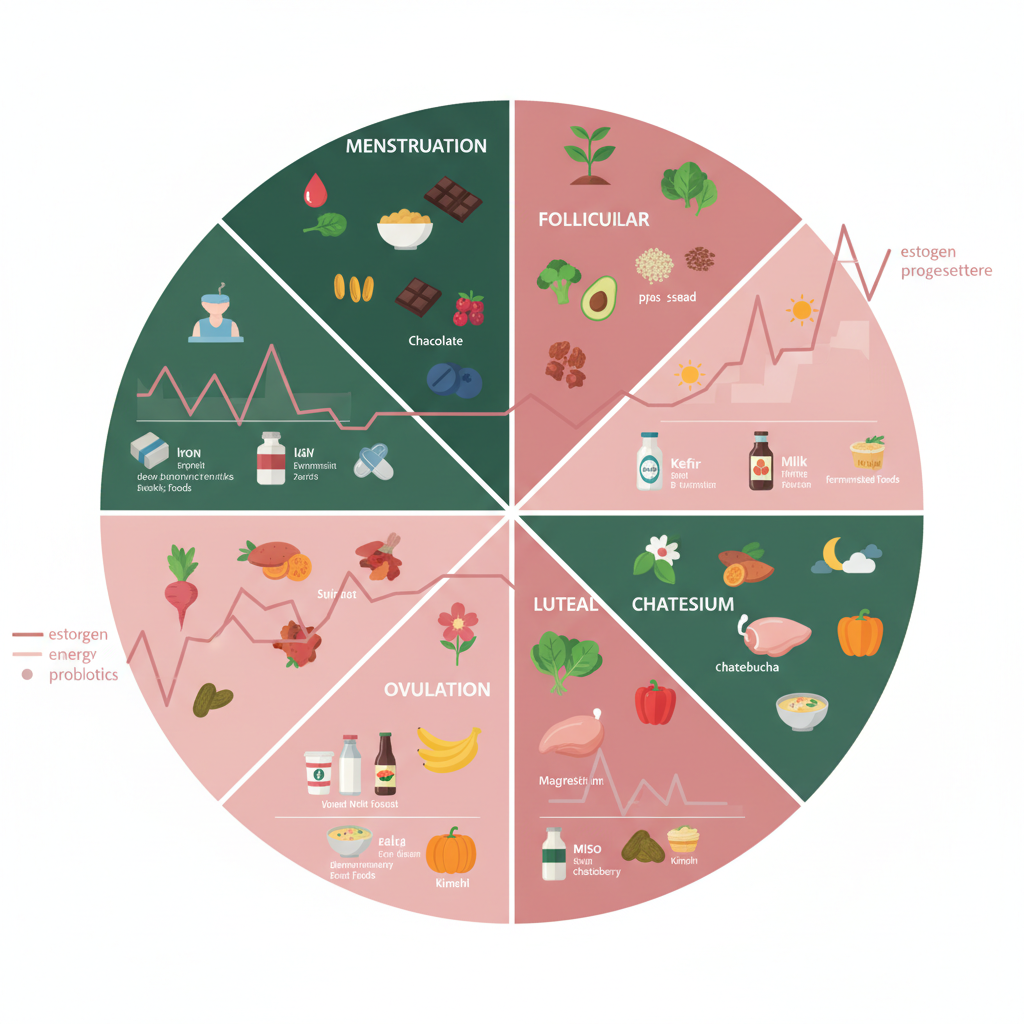
- Days 1–5: Menstruation — Estrogen and progesterone are at their lowest. The uterine lining sheds. Prostaglandins drive cramping and inflammation.
- Days 6–13: Follicular Phase — Estrogen rises steadily as follicles mature in the ovary. Insulin sensitivity is at its peak. Cognitive clarity and physical energy improve.
- Day 14 (approximately): Ovulation — A surge in LH triggers egg release. Testosterone briefly peaks. Libido, confidence, and social drive are heightened.
- Days 15–28: Luteal Phase — The corpus luteum secretes progesterone. Estrogen rises then both hormones fall in the late luteal phase if conception does not occur. Basal metabolic rate increases by 100–300 kcal/day. Cravings, mood shifts, and bloating are common.
Key clinical finding: A 2021 review published in Frontiers in Physiology confirmed that macronutrient metabolism, insulin sensitivity, and substrate oxidation all vary significantly across the menstrual cycle — with the luteal phase showing increased fat oxidation and a higher carbohydrate requirement compared to the follicular phase. (Source: Frontiers in Physiology, 2021)
Understanding these shifts is not a luxury — it is the foundation of intelligent nutritional strategy.
The Menstrual Phase: Replenish, Restore, and Reduce Inflammation
What Is Happening Hormonally
When menstruation begins, both estrogen and progesterone have dropped to their nadir. Prostaglandins — inflammatory lipid compounds — contract the uterus to expel its lining. For women with dysmenorrhea, this process is intensified by an excess of pro-inflammatory prostaglandins relative to anti-inflammatory ones.
Nutritional Priorities
This phase calls for deep nourishment and anti-inflammatory eating. Your body is actively losing iron through blood loss, and inflammatory signalling is at its highest.
Foods to prioritise:
- Iron-rich foods: Grass-fed beef, organic chicken liver, lentils, dark leafy greens (especially cooked spinach and Swiss chard). Pair with vitamin C sources to enhance non-haem iron absorption.
- Omega-3 fatty acids: Wild salmon, sardines, walnuts, and flaxseed have been shown in multiple randomised controlled trials to reduce prostaglandin-driven cramping and pain intensity.
- Warming, cooked foods: Bone broth, slow-cooked stews, and root vegetables are easier to digest when digestive capacity is reduced due to low hormone levels.
- Dark chocolate (70%+): Rich in magnesium, which supports smooth muscle relaxation and serotonin production.
Foods to minimise: Alcohol (amplifies prostaglandin production), highly processed seed oils, excess sodium, and refined sugar — all of which potentiate inflammation.
The Follicular Phase: Build, Energise, and Optimise Metabolism
What Is Happening Hormonally
The follicular phase is your hormonal spring. Rising estrogen drives follicle development, increases serotonin receptor sensitivity, improves insulin signalling, and enhances protein synthesis. You will likely notice sharper cognitive function, higher pain tolerance, better sleep quality, and an elevated mood.
From a metabolic perspective, this is your most anabolically favourable window. Your body is primed to build lean tissue, absorb nutrients efficiently, and metabolise carbohydrates cleanly.
Nutritional Priorities
Leverage estrogen's anabolic lift by prioritising lean protein and complex carbohydrates. This is the phase to front-load harder training sessions and experiment with new foods and recipes — your gut transit time is optimal and digestive enzyme activity is higher.
Foods to prioritise:
- Lean protein: Eggs, tempeh, edamame, wild fish, and legumes to support muscle protein synthesis
- Fermented foods: Kefir, kimchi, sauerkraut, miso — your microbiome is most receptive to colonisation support during this phase
- Cruciferous vegetables: Broccoli, cauliflower, Brussels sprouts, and cabbage contain indole-3-carbinol (I3C) and diindolylmethane (DIM), compounds that support healthy estrogen metabolism via the liver and gut
- Sprouts and seeds: Flaxseeds are particularly valuable here — their lignans support estrogen receptor modulation and promote healthy estrogen detoxification
- Light, fresh foods: Raw salads, smoothies, grain bowls — your digestion is robust and you can handle higher fibre loads
Key nutrient to focus on: B vitamins — particularly B6, B12, and folate — are critical cofactors in estrogen metabolism, neurotransmitter synthesis, and mitochondrial energy production. The Her-Biotics Original formula includes a comprehensive B-vitamin complex alongside 16 synergistic probiotic strains delivered via our patented SCO2 microencapsulation technology, ensuring they actually reach the gut alive and active.
The Ovulatory Phase: Peak Performance and Anti-Inflammatory Eating
What Is Happening Hormonally
Ovulation is brief — typically spanning 16 to 24 hours — but its hormonal environment extends across roughly days 12 to 16. Estrogen peaks just before the LH surge, and testosterone rises to its monthly high. You are at your most energetic, communicative, and socially confident.
This is also a phase of heightened inflammatory potential. The rupture of the ovarian follicle is an acute inflammatory event, and supporting your body's resolution pathways nutritionally makes a meaningful difference.
Nutritional Priorities
- Anti-inflammatory foods: Turmeric with black pepper (curcumin + piperine synergy), berries, olive oil, and green tea
- Zinc-rich foods: Pumpkin seeds, hemp seeds, chickpeas — zinc supports the LH surge and healthy follicle maturation
- Light, nutrient-dense meals: Your appetite may be naturally lower. Listen to it. Favour salads with quality protein, grain bowls, and cold-pressed juices.
- Hydration: Cervical mucus production peaks at ovulation — increasing filtered water and electrolyte intake supports this process
The Luteal Phase: Nourish Deeply, Support Progesterone, and Calm the Nervous System
What Is Happening Hormonally
The luteal phase is where most women experience their greatest nutritional challenges — and where cycle syncing delivers its most dramatic results. Progesterone is now dominant, and this has profound effects on physiology:
- Basal metabolic rate rises by 100–300 kcal per day, driving legitimate increases in hunger
- Serotonin and GABA activity drop, contributing to mood instability, anxiety, and irritability
- Insulin sensitivity decreases, meaning the same carbohydrate load causes a higher glucose response than in the follicular phase
- Gut motility slows (progesterone is a smooth muscle relaxant), causing bloating, constipation, and digestive discomfort
- Sodium retention increases, driven by aldosterone, causing water retention and breast tenderness
Research highlight: A 2020 study in the Journal of the Academy of Nutrition and Dietetics found that women consumed on average 230 additional calories per day during the luteal phase, with cravings skewed toward high-fat, high-sugar foods — a biologically driven response to serotonin depletion and elevated metabolic demand. (Source: NIH/PubMed, PMID: 32204975)
Nutritional Priorities
The luteal phase demands more calories, more complex carbohydrates, more magnesium, and deeper nervous system support. This is not the time for caloric restriction — it is the time for strategic nourishment.
Foods to prioritise:
- Complex carbohydrates: Sweet potato, brown rice, quinoa, oats — these support serotonin synthesis by facilitating tryptophan transport across the blood-brain barrier
- Magnesium-rich foods: Dark chocolate, avocado, pumpkin seeds, leafy greens — magnesium is depleted in the luteal phase and is critical for GABA activity, cortisol regulation, and smooth muscle relaxation
- Calcium-rich foods: Dairy, fortified plant milks, tahini, almonds — luteal phase calcium supplementation has been shown to reduce PMS severity by up to 48%
- Vitamin B6 foods: Chickpeas, turkey, banana, pistachios — B6 is essential for progesterone synthesis and serotonin production
- Healthy fats: Avocado, coconut oil, olive oil — progesterone is a steroid hormone synthesised from cholesterol; adequate dietary fat intake directly supports its production
Foods to minimise: Caffeine (amplifies cortisol and depletes magnesium), alcohol (disrupts progesterone metabolism in the liver), salty processed foods (worsen water retention), and high-glycaemic foods (exacerbate insulin resistance).
Supporting Luteal Phase Hormones with Targeted Supplementation
For women who experience significant PMS symptoms — mood swings, breast tenderness, cramping, bloating, and fatigue — food alone may not be sufficient. The Her-Biotics PMS Support formula was specifically designed for the luteal phase, combining our 16-strain SCO2-encapsulated probiotic base with Chasteberry (Vitex agnus-castus), Evening Primrose Oil, Magnesium Glycinate, and Vitamin B6 — a clinically informed stack that addresses the root drivers of PMS rather than just masking symptoms.
Chasteberry has been studied in multiple double-blind, placebo-controlled trials for its ability to modulate dopamine receptors and reduce elevated prolactin — a hormone that, when elevated, suppresses progesterone and worsens PMS symptoms significantly.
The Gut-Hormone Axis: Why Your Microbiome Is Your Hormonal Control Panel
No discussion of cycle syncing and hormonal nutrition is complete without addressing the microbiome — and specifically, a specialised community of gut bacteria called the estrobolome.
The estrobolome is the collection of gut microorganisms capable of metabolising estrogens. These bacteria produce an enzyme called beta-glucuronidase, which deconjugates estrogen metabolites in the gut, determining how much estrogen gets reabsorbed into circulation versus excreted in stool.
When the microbiome is disrupted:
- Beta-glucuronidase activity becomes dysregulated
- Estrogen reabsorption increases, contributing to estrogen dominance
- Symptoms worsen: heavier periods, worsened PMS, fibrocystic breast changes, endometriosis flares
- Progesterone-estrogen ratio is skewed, amplifying luteal phase symptoms
When the microbiome is thriving:
- Estrogen is efficiently conjugated and excreted
- The gut-brain axis supports serotonin production (95% of serotonin is synthesised in the gut)
- Inflammation is regulated via short-chain fatty acid (SCFA) production
- Nutrient absorption — including iron, magnesium, B12, and zinc — is optimised
This is precisely why probiotic quality is not a minor detail — it is central to hormonal health. Most standard probiotic supplements lose 60–90% of their viable bacteria before they ever reach the large intestine, destroyed by stomach acid and bile salts.
At Her-Biotics, we engineered our patented SCO2 (supercritical carbon dioxide) microencapsulation technology specifically to solve this problem. Each probiotic strain is encapsulated within a protective lipid matrix using pressurised CO2, creating a shell that survives gastric acid, bile, and heat — delivering 1000× more viable organisms to the colon where they are needed. You can read the full science behind our delivery system on our Science Page.
For women navigating perimenopause and menopause, the estrobolome becomes even more critical as ovarian estrogen production declines. The Her-Biotics Menopause Support formula supports this transition with targeted botanicals including Black Cohosh, Red Clover, and Sage Leaf, alongside Vitamin D3/K2 — all built on our SCO2 probiotic base to ensure the gut-hormone axis remains optimally supported throughout the menopausal transition.
Practical Cycle Syncing: A Week-by-Week Nutritional Blueprint
Here is a simplified starting framework. Remember — your cycle is unique. Track your symptoms for two to three cycles before drawing firm conclusions.
Week 1 (Menstruation): The Iron & Anti-Inflammatory Week
- Begin each day with warm lemon water and a B-vitamin-rich breakfast (eggs, leafy greens)
- Include one iron-rich meal daily
- Add omega-3s at every lunch or dinner
- Reduce processed foods, alcohol, and excess caffeine
- Prioritise rest and sleep — your body is doing significant repair work
Week 2 (Follicular): The Build & Energise Week
- Increase lean protein to support the anabolic estrogen environment
- Add fermented foods daily to support microbiome diversity
- Include cruciferous vegetables at least once daily
- Experiment with higher-intensity training — your body is primed for it
- Add flaxseeds (1–2 tablespoons ground) to smoothies or porridge
Week 3 (Ovulation): The Peak Performance Week
- Anti-inflammatory focus: turmeric, berries, olive oil, green tea
- Stay well-hydrated — increase water intake by 500ml
- Zinc-rich foods to support the LH surge
- Enjoy social meals — your energy and mood are at their monthly peak
- Continue probiotic support to maintain gut diversity
Week 4 (Luteal): The Nourish & Restore Week
- Do not restrict calories — honour your elevated metabolic rate
- Prioritise complex carbohydrates at dinner to support serotonin and sleep
- Magnesium-rich foods at every meal
- Reduce caffeine after midday to protect progesterone metabolism
- Add an Epsom salt bath (magnesium absorption through skin) two to three times per week
Bringing It All Together: Cycle Syncing Is a Practice, Not a Prescription
Cycle syncing and hormonal nutrition are not about perfection. They are about building body literacy — the ability to read your own signals, understand their biochemical origins, and respond with informed compassion rather than frustration.
Every woman's cycle is shaped by her unique genetics, stress load, gut health, sleep quality, and nutritional history. Some women will notice dramatic improvements within a single cycle of intentional eating. Others will need two to three months for their microbiome and hormonal rhythms to recalibrate.
What the science consistently shows is this: women who align their nutrition with their hormonal phases report lower PMS severity, improved mood stability, better energy, reduced cravings, and improved gut health — outcomes that compound powerfully over time.
For further reading, recipes, and cycle-tracking tools developed by our clinical team, visit the Radiance Hub — our free educational resource centre built specifically for women who want to understand and optimise their hormonal health at every stage of life.
Ready to Sync Your Cycle from the Inside Out?
Nutrition is the foundation — but without a thriving microbiome, even the most carefully curated diet cannot fully express its hormonal benefits. Her-Biotics was founded on one conviction: that women deserve a probiotic that actually works, delivered by technology that guarantees survivability from capsule to colon.
Whether you are navigating PMS in your late twenties, optimising performance in your thirties, or managing the hormonal shifts of perimenopause, there is a Her-Biotics formula designed for exactly where you are right now. Browse the complete range at Shop All Formulas and take the first step toward a cycle that works with you — not against you.
Because when your gut is thriving, your hormones follow.
Dr. Chomba Chuma, MD is a women's health physician and the founder of Her-Biotics. She specialises in hormonal health, gut-immune medicine, and evidence-based nutritional psychiatry. Her-Biotics was born from her clinical practice and her belief that every woman deserves access to supplements backed by real science and real delivery technology.
This article is for educational purposes and does not constitute medical advice. Always consult your healthcare provider before making significant changes to your diet or supplement regimen.
Enjoyed this? Get the next one first.
Science made simple, delivered to your inbox. No spam, unsubscribe anytime.