

By Dr. Chomba Chuma, MD & Founder of Her-Biotics | September 2, 2026
There is a quiet revolution happening in women's health, and it begins somewhere most people never think to look: the trillions of microorganisms living in your gut. For decades, conversations about beauty after 50 have centered on topical creams, hormonal shifts, and calorie restriction. But the most compelling science of the past decade points unmistakably inward — toward the gut microbiome as a master regulator of how we age, how we look, and how we feel.
If you are a woman navigating your 50s — or preparing for that chapter — this article is for you. Not because aging is a problem to be solved, but because ageless wellness is something every woman deserves to understand and pursue with the full power of modern science behind her.
Let us explore exactly what happens to the microbiome as we age, why it matters profoundly for skin, energy, immunity, and longevity, and what you can do right now to shift the trajectory.
What Happens to Your Gut Microbiome After 50?
The human gut microbiome is one of the most complex ecosystems on Earth — roughly 38 trillion microbial cells comprising over 1,000 species, all working in dynamic concert with your immune system, hormones, brain, and skin. In your younger years, this ecosystem tends to be diverse, resilient, and highly functional.
But gut microbiome aging is a well-documented biological reality. Research published in Cell Host & Microbe and reinforced by large longitudinal studies consistently shows that microbial diversity declines significantly after the age of 40, with the steepest changes occurring post-menopause.
The Key Shifts That Happen After 50
Here is what the science tells us occurs in the microbiome of women in their 50s and beyond:
- Decline in Lactobacillus and Bifidobacterium populations — the foundational beneficial strains that support immunity, vaginal health, and nutrient absorption
- Rise in pro-inflammatory microbes — strains associated with low-grade chronic inflammation, often called inflammaging
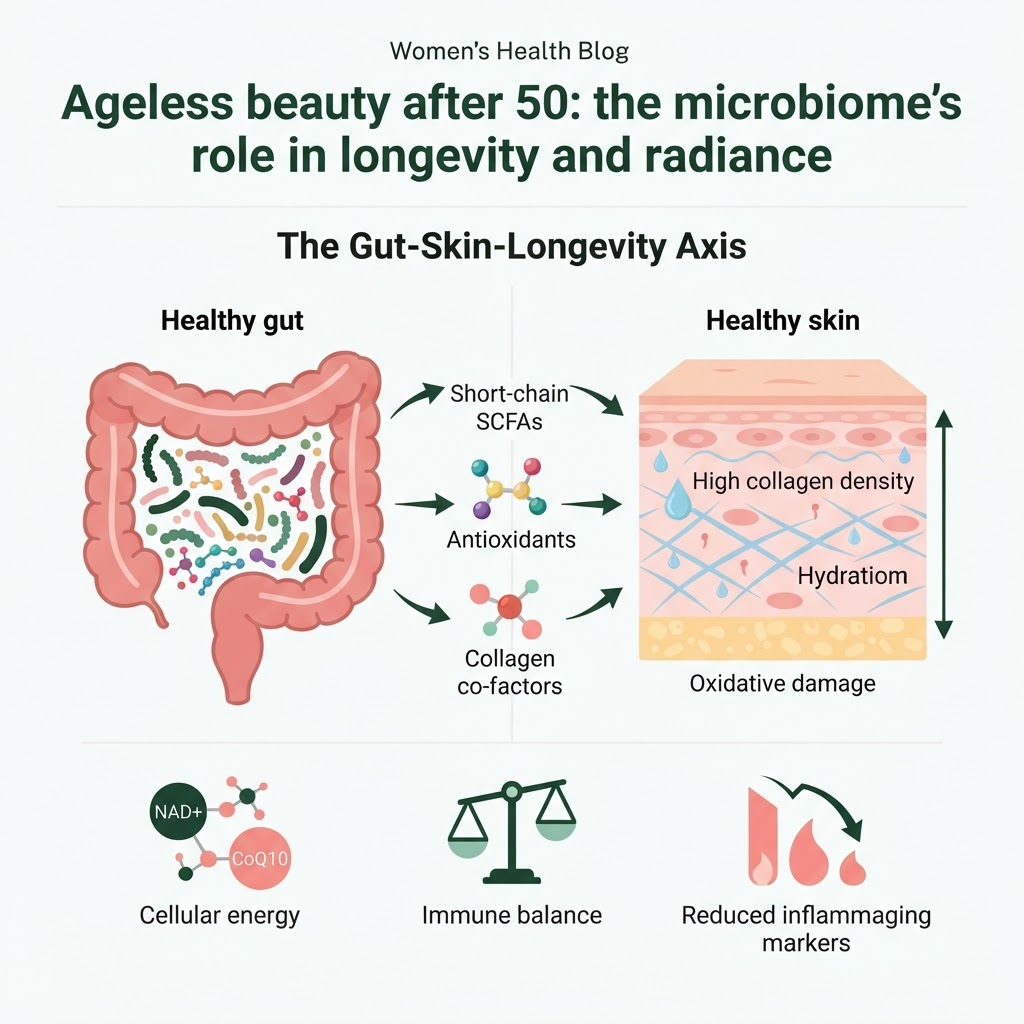
- Reduced production of short-chain fatty acids (SCFAs) — critical molecules that protect the gut lining, regulate metabolism, and communicate anti-inflammatory signals throughout the body
- Increased intestinal permeability — commonly known as "leaky gut," which allows bacterial fragments to enter systemic circulation and trigger immune activation
- Altered estrobolome function — the estrobolome is a subset of gut bacteria responsible for metabolizing estrogens; its disruption after menopause compounds hormonal imbalance
"Gut microbiota composition in older adults is strongly associated with measures of frailty, inflammation, and health trajectory — making it one of the most modifiable determinants of healthy aging." — Clarke et al., Nature Reviews Gastroenterology & Hepatology (2019)
This is not abstract biology. These microbial shifts have direct, measurable consequences for your skin texture, energy levels, cognitive clarity, immune resilience, and even your cardiovascular health. Understanding this connection is the first step toward genuine ageless wellness.
The Gut-Skin Axis: Your Microbiome Is Writing Your Complexion
If you have ever noticed that your skin seems to dull, thin, or lose elasticity more rapidly in your 50s, the gut-skin axis is a critical piece of that puzzle. This bidirectional communication highway between the gut and the skin is regulated by immune signals, hormones, and inflammatory mediators — all of which are profoundly influenced by microbial balance.
Collagen: The Structural Protein Your Gut Helps Build
Collagen is the most abundant protein in the human body, forming the scaffolding of your skin, joints, bones, and connective tissue. After the age of 25, collagen production begins declining at roughly 1–1.5% per year. By 50, women have typically lost 30% or more of their peak collagen density — a process that accelerates sharply in the first five years after menopause.
Here is where the gut connection becomes striking:
- Your gut microbiome produces enzymes and metabolites that directly influence the expression of collagen-synthesizing genes in skin fibroblasts
- SCFAs produced by beneficial gut bacteria — particularly butyrate — reduce inflammation that would otherwise accelerate collagen degradation
- A healthy gut lining optimizes the absorption of collagen co-factors: Vitamin C (essential for hydroxylation of proline and lysine in collagen assembly), zinc, and silica
- Dysbiosis increases matrix metalloproteinase (MMP) activity — enzymes that break down collagen in the dermis
A 2021 study from the Journal of Dermatological Science found that women who supplemented with multi-strain probiotics for 12 weeks showed measurably improved skin hydration, elasticity, and reduced depth of wrinkles — outcomes linked directly to reduced systemic inflammation and improved gut barrier integrity. Read the research at PubMed
The conclusion is elegant in its simplicity: nurture your gut, and your gut will nurture your skin.
Antioxidants and Oxidative Stress: Where Radiance Lives
One of the most underappreciated roles of the gut microbiome is its function as an antioxidant ecosystem. Beneficial bacteria produce and activate a range of antioxidants — including certain B vitamins, urolithins, and equol — that combat the oxidative stress responsible for accelerated cellular aging.
Oxidative stress occurs when free radicals outpace the body's antioxidant defenses. In the skin, this manifests as:
- Hyperpigmentation and uneven tone
- Breakdown of elastin and collagen
- Chronic low-grade inflammation (the root of inflammaging)
- Impaired DNA repair in skin cells
A microbiome in decline produces fewer of these protective molecules, leaving cells more vulnerable. This is precisely why targeted antioxidant support — especially with compounds like astaxanthin, resveratrol, and CoQ10 — is so powerful when delivered alongside a robust probiotic foundation. Your gut bacteria help activate and recycle these molecules, amplifying their protective effects many times over.
NAD+, Cellular Energy, and the Microbiome Connection
If there is one molecule that has captured the imagination of longevity scientists in the past decade, it is NAD+ (nicotinamide adenine dinucleotide). NAD+ is a coenzyme present in every cell of the body, and it is absolutely essential for:
- Mitochondrial energy production — powering the cellular engines that keep every organ functioning
- DNA repair — activating sirtuins, the proteins often called "longevity genes"
- Regulation of circadian rhythms — which govern sleep, metabolism, and hormonal cycles
- Immune modulation — particularly relevant in the context of aging immunity
NAD+ levels decline by approximately 50% between ages 40 and 60. This decline is a key driver of the fatigue, cognitive fog, slower recovery, and metabolic changes that many women attribute simply to "getting older."
How the Microbiome Influences NAD+ Status
This is where the science becomes genuinely exciting. Your gut bacteria are active participants in NAD+ biosynthesis. Specifically:
- Certain gut microbes — including Lactobacillus species — synthesize nicotinamide riboside (NR) and nicotinic acid, direct precursors to NAD+
- A healthy gut lining maximizes the absorption of dietary NAD+ precursors from food and supplements
- Gut-derived butyrate activates SIRT1 and SIRT3 — sirtuin enzymes that depend on NAD+ to perform DNA repair and metabolic regulation
- Dysbiosis and gut inflammation increase CD38 enzyme activity, an NAD+ consumer that accelerates its breakdown
This means that supplementing with NAD+ precursors in isolation, without addressing gut health, is like pouring water into a leaking bucket. The microbiome must be healthy for NAD+ supplementation to reach its full potential.
This synergy is at the scientific heart of why we formulated Her-Biotics Ageless 50+ the way we did — combining a potent 16-strain probiotic base with NAD+, Astaxanthin, CoQ10, and Resveratrol, all delivered through our patented SCO2 microencapsulation technology for maximum bioavailability.
For a deeper dive into our clinical formulation rationale, visit our Science Page.
Inflammaging: The Silent Accelerator of Biological Age
The term inflammaging — coined by gerontologist Claudio Franceschi — describes the chronic, low-grade, sterile inflammation that accumulates with age and serves as the common root of virtually every age-related condition: cardiovascular disease, cognitive decline, metabolic dysfunction, osteoporosis, and accelerated skin aging.
The gut microbiome is arguably the single largest driver of inflammaging in women over 50. Here is why:
- As beneficial bacteria decline, gram-negative bacteria increase, releasing lipopolysaccharides (LPS) — potent inflammatory molecules — across a permeable gut lining
- Reduced SCFA production means less activation of regulatory T-cells that keep the immune system in calibrated balance
- Estrogen decline post-menopause directly reduces microbial diversity, creating a feedback loop of dysbiosis and inflammation
- Systemic LPS exposure activates NF-κB pathways in skin, liver, brain, and cardiovascular tissue simultaneously
"Targeting the gut microbiome represents one of the most promising strategies for reducing inflammaging and extending healthspan in older adults." — Ferrucci & Fabbri, Nature Reviews Cardiology, 2018. Full article via NIH
Probiotic Strains That Directly Counter Inflammaging
Not all probiotics are created equal in their anti-inflammatory capacity. The strains with the strongest evidence for reducing inflammaging markers in postmenopausal women include:
- Lactobacillus acidophilus NCFM — reduces circulating IL-6 and TNF-α
- Bifidobacterium longum BB536 — strengthens gut barrier integrity and reduces LPS translocation
- Lactobacillus rhamnosus GG — modulates regulatory T-cell activity
- Bifidobacterium breve B-3 — associated with reduced visceral fat and metabolic inflammation
- Lactobacillus plantarum 299v — improves SCFA production and reduces systemic oxidative stress
All five of these clinically validated strains are included in our 16-strain formula across the Her-Biotics range. You can explore the foundational formula in Her-Biotics Original or see the full product ecosystem at Shop All Formulas.
Practical Nutrition Strategies to Support Your Microbiome After 50
Science is only empowering when it translates into action. Here are evidence-based strategies that work synergistically with targeted supplementation:
Foods That Feed Longevity Bacteria
Prioritize prebiotic-rich foods that nourish the specific bacteria responsible for SCFA production and anti-inflammatory signaling:
- Jerusalem artichokes, chicory root, leeks, and garlic — rich in inulin and FOS (fructooligosaccharides)
- Green bananas and cooled cooked potatoes — high in resistant starch
- Oats and barley — beta-glucan fiber shown to increase Bifidobacterium populations
- Flaxseeds — lignans metabolized by gut bacteria into enterolactone, which modulates estrogen receptors
Fermented foods provide live cultures and postbiotic metabolites:
- Kimchi, miso, tempeh, kefir, and traditionally fermented sauerkraut
- Aim for at least two portions daily for measurable microbiome impact
Lifestyle Factors With Direct Microbiome Impact
- Prioritize sleep — gut microbiome diversity is directly tied to circadian rhythm quality; aim for 7–9 hours with consistent sleep-wake times
- Resistance training 2–3× weekly — shown in multiple RCTs to increase Akkermansia muciniphila, a keystone species associated with metabolic health and longevity
- Manage cortisol — chronic stress dramatically reduces Lactobacillus populations; adaptogenic support (like the ashwagandha in Her-Biotics Sport) can buffer this effect
- Minimize ultra-processed foods — emulsifiers like carboxymethylcellulose and polysorbate-80 directly disrupt gut biofilm integrity
- Stay hydrated — gut motility and mucus layer integrity both depend on adequate hydration
Why Delivery Technology Matters as Much as Ingredients
Here is a critical point that most supplement marketing glosses over: the majority of probiotic supplements on the market deliver far fewer viable bacteria to your large intestine than their labels claim. Standard capsule and tablet formulations expose live bacteria to stomach acid, bile salts, and digestive enzymes — environments that kill the vast majority of organisms before they reach the colon where they are needed.
This is why we developed and patented SCO2 (supercritical carbon dioxide) microencapsulation technology at Her-Biotics. Using supercritical CO2 as a processing medium — a state of matter between liquid and gas achieved at precise pressure and temperature — we encapsulate each probiotic organism in a multi-layered lipid matrix that:
- Protects bacteria from gastric acid with 99.9% survival through the stomach
- Survives bile salt exposure in the small intestine
- Releases precisely in the large intestine where colonization occurs
- Extends shelf stability without refrigeration
The result is 1000× more viable probiotics delivered to the gut compared to standard supplements — a difference that is not marginal but transformative in clinical impact. Every strain we formulate means nothing if it does not survive the journey.
You can read the full peer-reviewed validation of our SCO2 technology on our Science Page.
Bringing It All Together: A Blueprint for Ageless Wellness After 50
The evidence is now unambiguous. Ageless wellness — the kind that expresses itself in radiant skin, sustained energy, sharp cognition, and resilient immunity — is not primarily the product of expensive serums or restrictive diets. It emerges from the health of an ecosystem: your gut microbiome, and its intricate relationships with collagen synthesis, NAD+ metabolism, antioxidant capacity, hormonal balance, and inflammatory regulation.
For women over 50, the strategic priorities are clear:
- Restore and maintain microbial diversity with clinically validated, high-survival probiotic strains
- Support NAD+ biosynthesis at both the precursor supply and gut absorption level
- Neutralize inflammaging with targeted anti-inflammatory strains and dietary strategies
- Amplify antioxidant defenses with synergistic compounds that the microbiome can activate and recycle
- Protect collagen by reducing gut-driven inflammation and optimizing co-factor absorption
This is not about fighting aging. It is about aging with biological intelligence — giving your body the inputs it needs to express the vitality that is genuinely available to you at every decade.
Explore more resources, recipes, and women's health science in our Radiance Hub.
Ready to Experience the Difference From the Inside Out?
If you are a woman in your 50s — or approaching that chapter and wanting to build the strongest biological foundation possible — Her-Biotics Ageless 50+ was designed specifically for you. This is our most advanced formula: 16 clinically validated probiotic strains delivered via patented SCO2 microencapsulation, paired with NAD+ for cellular energy and DNA repair, Astaxanthin (one of nature's most potent antioxidants at 6,000× the strength of Vitamin C in certain oxidative contexts), CoQ10 for mitochondrial support, and Resveratrol for sirtuin activation. Every ingredient was selected because of how it works with the microbiome — not just alongside it.
Your 50s are not a countdown. They are an invitation to live in a body that is optimized, informed, and radiant. Shop Her-Biotics Ageless 50+ today and join thousands of women who are rewriting what this chapter looks and feels like — from the inside out.
Dr. Chomba Chuma, MD, is a functional medicine physician, microbiome researcher, and founder of Her-Biotics. She specializes in women's gut health, hormonal optimization, and the science of longevity. All content is for educational purposes and does not constitute personalized medical advice. Consult your healthcare provider before beginning any new supplement regimen.
Enjoyed this? Get the next one first.
Science made simple, delivered to your inbox. No spam, unsubscribe anytime.